Commercial refrigeration plant
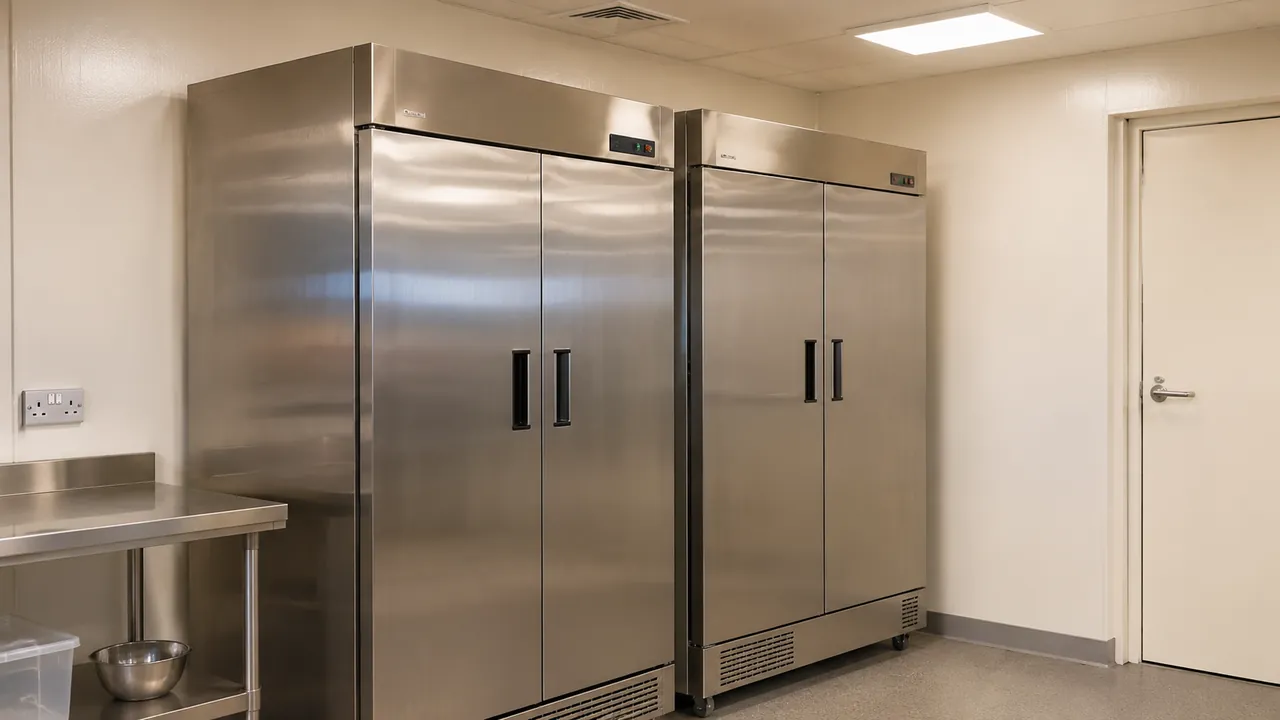
Condensing units and packs serving cold rooms and cabinets, with suction and discharge pressure, compressor running and condenser temperature on every unit.

We supply complete refrigeration monitoring that watches the health of the refrigeration system itself: suction and discharge pressure, compressor running, condenser and evaporator temperatures, refrigerant leaks and the power to the plant. Pressure transducers and temperature probes fitted by your refrigeration engineer connect to battery-powered tags, which report through a ZARC Gateway to the dashboard, and the dashboard raises the alarm by SMS or email the moment a reading moves out of its limits. It suits commercial, industrial, marine, vehicle and off-grid systems, including high-pressure systems.
01
Cold storage monitoring tells you whether the contents are at temperature. Refrigeration monitoring tells you whether the system keeping them there is healthy, often before the contents notice. A falling suction pressure, a discharge pressure creeping up or a compressor that runs without stopping all show a fault developing while the cabinet or cold room still reads normal.
Pressure is read on the low side and the high side from transducers on the service ports, rated to the system's working pressure. Temperatures are read from NTC probes on the suction line, the discharge line, the condenser and the evaporator. A current clamp shows whether the compressor and condenser fans are running. A refrigerant gas sensor near the plant reports a leak, and a power tag reports the supply to the system going off and coming back.
The sensors are fitted by your own refrigeration engineer, or by ours, at the points they choose; we attach a tag to each one, as we do for every other reading. Every value goes to the dashboard, which keeps the full history, so a slow loss of charge or a condenser fouling over weeks is visible as a trend, not only as an alarm.
The system is specified to the plant: which pressures and temperatures matter, the limits and rates that count as a fault, and who is called in hours and out of hours.
02
Wherever refrigeration plant runs out of sight, and a fault costs stock, a charter or a repair bill, the monitoring has a job. These are the systems we are asked about most, and the list is not exhaustive.
Condensing units and packs serving cold rooms and cabinets, with suction and discharge pressure, compressor running and condenser temperature on every unit.
Fridges, freezers and cold stores on yachts and workboats, where the plant sits deep in the hull and a fault at sea is expensive. The 433 MHz radio is chosen for its reach through metal and bulkheads.
Refrigeration units on vans, trailers and mobile cold stores, monitored at the depot or on site.
Refrigeration on remote sites and off-grid installations, with gateway backhaul over 4G, Wi-Fi, Ethernet or satellite.
Systems running at high working pressures, monitored with transducers rated for the pressure on each side of the plant.
A refrigerant gas sensor near the plant, connected to a tag, makes this a refrigerant leak monitoring system: the dashboard raises the alarm when refrigerant is detected, supporting the leak-check records F-gas rules expect.
A current clamp shows running or stopped, and the dashboard shows run time and cycling, so a compressor that never rests is seen early.
Chillers and refrigeration plant that keep a process or product at temperature.
Product and room temperatures for the cold rooms, fridges and freezers the plant serves, on the same dashboard.
A timestamped record of pressures, temperatures, faults and response times for every system, for service reviews, compliance checks and insurers.
03
Sensors are fitted where your engineer chooses; each connects to a tag that runs on its own battery with no connection to a building or vessel network. Typical fittings:
A pressure transducer reading suction pressure.
A pressure transducer reading discharge pressure, rated to the system.
NTC probes strapped to the pipe surface.
Probes on the coil, the air off the coil or the pipe.
A current clamp around one conductor, for running or stopped.
A refrigerant gas sensor positioned for the refrigerant in use, specified at survey.
04
Every system appears on one live board showing suction and discharge pressure, the key temperatures, compressor and fan running state and the power supply, grouped by site, vessel or vehicle. Each fault is recorded with when it started, when it cleared and how long it lasted. Trends run from one hour to one year, and the history exports for service reviews, compliance checks and insurers. Real-time and historical telemetry is kept for as long as you need it, for compliance and audit, on a UK-hosted dashboard or on servers on your own site.
The dashboard raises the alarm in real time when a pressure crosses a limit or moves faster than a rate you set, when a temperature drifts out of range, when a compressor stops or runs without resting, when refrigerant is detected and when the plant loses power. It sends each alarm by SMS or email to the people you name, with escalation to further contacts and separate routes in and out of hours.
05
It fits every sector that runs refrigeration plant it cannot stand beside, including:
Refrigeration plant across client sites, on one dashboard.
Process cooling and refrigerated storage that keep production running.
Pharmacy and laboratory refrigeration where a plant fault puts stock at risk.
Refrigeration-based cooling watched alongside the systems that run it.
Yachts and workboats with refrigeration below deck.
Kitchens and stores with condensing units on the roof or in a yard.
06
| Parameter | Specification |
|---|---|
| Systems | Commercial, industrial, marine, vehicle and off-grid refrigeration, including high-pressure systems |
| What it watches | Suction and discharge pressure, line and coil temperatures, compressor and fan running, refrigerant leaks and power |
| Sensors | Pressure transducers rated to the system and NTC probes, fitted by your refrigeration engineer or ours |
| Controls | Reads the plant only; the controller and safety devices are untouched |
| Alarms | Raised by the dashboard in real time and sent by SMS or email, with escalation |
| Parameter | Specification |
|---|---|
| Dashboard | Real-time and historical telemetry for compliance and audit |
| Data | Kept for as long as you need it; UK-hosted or on servers on your own site |
| Power | Battery-powered tags; only the gateway needs a power supply |
| Connectivity | 433 MHz to a ZARC Gateway on 4G, Wi-Fi, Ethernet or satellite |
| Manufacture | Designed and manufactured in the UK; UKCA marked |
07
You tell us which systems matter, where they are, what a failure costs and who is called in hours and out of hours.
With your refrigeration engineer we choose the pressure and temperature points, set the limits and rates for each system, and build the alarm routes.
Your engineer, or ours, fits the transducers and probes; we attach a tag to each and place the gateway after a site survey.
We check each reading against the plant's own gauges and controller, and send a test alarm to every recipient before handover.
Ready to get started? Every deployment starts with a conversation with one of our engineers.
Talk to an engineer08
Each tag sends over 433 MHz radio to a ZARC Gateway on site, which passes the reading to the dashboard over 4G, Wi-Fi, Ethernet or satellite backhaul. The dashboard checks every reading against its limits and rates and raises the alarm. The radio is chosen for its reach through metal, plant rooms and bulkheads. The tags only transmit; with no receiver on board, nothing can alter their settings or reach them over the air.
Each point is two parts: the sensor or input that suits the job, and the ZARC tag we build it into, which carries the sensor's readings over our own 433 MHz radio to the ZARC Gateway and the dashboard.
Suction and discharge pressure from the service ports.
Line, coil and room temperatures from NTC probes.
Compressor and fans running or stopped.
Supply to the plant off and restored.
Monitoring of the refrigeration system itself: suction and discharge pressure, compressor running, key temperatures, refrigerant leaks and power. Sensors fitted to the plant connect to battery-powered tags, and the dashboard raises the alarm by SMS or email when a reading moves out of its limits.
Cold storage monitoring watches the contents: the temperature of the cold room, fridge or freezer and its door. Refrigeration monitoring watches the plant that keeps them cold. Many sites run both on the same dashboard.
Your own refrigeration engineer, or ours. The transducers go on the low-side and high-side service ports and the probes on the lines and coils; we attach a tag to each sensor and commission the system.
Yes. Transducers are specified and rated to the working pressure on each side of the system, including high-pressure refrigerants.
Yes. A refrigerant gas sensor, specified to the refrigerant in use, is placed near the plant and connected to a tag, and the dashboard raises the alarm when refrigerant is detected. Pressure trends also show a slow loss of charge. It supports the leak-check records F-gas rules expect; it does not replace the statutory checks or a certified leak detection system where one is required.
Yes. The 433 MHz radio is chosen for its reach through metal and bulkheads, and the gateway connects over 4G, Wi-Fi, Ethernet or satellite. Range is confirmed by survey, and a larger vessel may need more than one gateway.
Events such as a compressor stopping or refrigerant being detected typically reach the dashboard within a second. Pressures and temperatures arrive at an interval you set, down to every minute, and the alarm is raised as soon as one crosses a limit or moves faster than the rate you set.
Whoever you name for each system: the owner, the site team, the refrigeration contractor or the on-call engineer. The dashboard sends alarms by SMS or email, with separate routes in and out of hours and escalation to further contacts.
Yes. Every pressure, temperature, run state and alarm is kept as a timestamped record, held for as long as you need it, and exports for service reviews, compliance checks and insurers.
No. It reads the plant and does not control it. The controller, safety devices and pressure switches stay exactly as they are.
Each tag is battery-powered, up to five years as standard and longer with additional cells. Only the gateway needs a power supply, and battery backup is available for it.
Looking for something else?
Most sensing needs are met by a tag we already build, configured for your equipment. If yours needs a sensor or interface we don't list, we have the engineering to build it. Tell us what you need to measure, and we will tell you how we would do it.
Discuss your requirementTell us what is happening on site, what you need to see, and the event you need to hear about. We will come back with the system that answers it.
Direct contact
Location
Venator House, Unit 9, 15-17 St Stephen's Road, Bournemouth
Dorset, BH2 6LA · VAT GB 409644484
Solutions contact
Direct to the team that designs and builds the system. Tell us the refrigeration systems that matter.