Military base monitoring is the continuous observation of a defence estate's perimeters, buildings, structures and services, reported as state changes to the people responsible for the site. On a defence estate, the first question asked of any such system is not what it can see but what it adds to the attack surface, so that is where this page starts.
The answer is structural rather than procedural. The sensors transmit and never receive: there is no inbound radio path, no pairing, no remote configuration and no over-the-air update mechanism to protect. They carry no IP address and join no network, so there is nothing to scan, nothing to enumerate and nothing to patch in the field. A sensor that offers no way in gives an adversary nothing to hold. Site IT and OT are untouched because the monitoring layer never meets them: readings travel one way over licence-free 433 MHz radio to a dedicated gateway, and the gateway's outbound connection is the single point the estate controls and inspects.
The estate reality is what makes monitoring systems for defence worth having at all. Defence estates are large, dispersed, partly unoccupied and expensive to walk. Patrol economics behave the same way at estate scale as on any long boundary: the round costs the same whether anything has happened or not, and a fence line, a gate or an empty building is only checked when someone reaches it. Fixed sensing re-prices that work, turning routine circuits into targeted response to a verified event at a known position, so the guarding hours that remain are spent where something has actually changed.
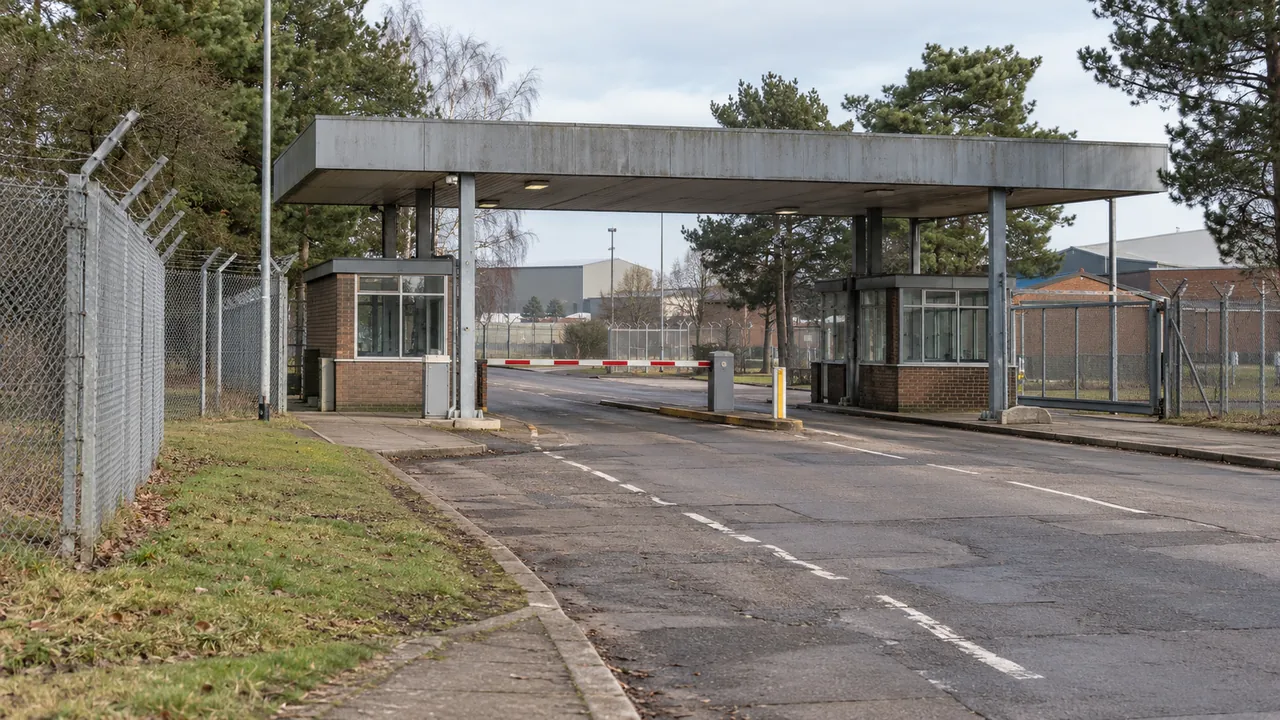
The estate breaks down into familiar problems. Perimeter and gate events follow the perimeter intrusion detection pattern applied at base scale: fence-line movement sensing on the runs, PIR presence at gates and chokepoints, door and gate state at controlled points. Unoccupied buildings inside the wire are voids by another name — barracks blocks, stores and technical buildings between uses carry the same escape-of-water, entry and frost risks as any empty property, and the same sensors answer them.
Structures and services get their own threads. Masts, towers, antenna supports and temporary works report sway and movement, so structural attention follows readings rather than the inspection rota. Water leak alerting matters across ageing building stock, where a failed joint in an unvisited plant room runs until someone happens to attend. Suppression systems that alarm locally can report centrally, as complementary, best-endeavours visibility of what the certified systems are doing — never as a replacement for them.
Deployment is governed from the first visit. An RF survey establishes how the estate behaves; a sensor schedule is agreed before anything is fixed; commissioning produces a record of every install point; and the reporting that follows is evidence-ready, with every event timestamped and every alert carrying who was notified and who acknowledged it. The result is a monitoring layer whose scope, positions and outputs are documented well enough to be audited against its own commissioning record.
The architecture serves defence estate operators first, then the FM contractors who carry MOD estate portfolios, and operators beyond the military who need secure facility monitoring: research facilities, processing sites and other estates whose security posture rules out conventional connected monitoring. Remote monitoring for secure sites of that kind runs on the same one-way architecture. This equipment is in service now, with live UK deployments at national scale.
This page describes monitoring and operational visibility, provided on a best-endeavours basis. No security clearance, accreditation or approval is claimed or implied. It does not replace certified alarm or life-safety systems, protective-security assessment, guarding, policing, statutory obligations or the estate's own security governance.