Skip to content

Remote asset monitoring systems for every site you run

Remote asset monitoring systems from one UK manufacturer: wireless sensors on the plant, tanks, panels, cabins and equipment across your sites, a ZARC Gateway at each site, and one dashboard that alerts your team by SMS and email the moment an asset needs attention.

We design, build and run every part of the system ourselves, from the sensors and the radio to the platform and its dashboards. Start with the assets that matter most, then add more sensors and more sites to the same system whenever you need them.

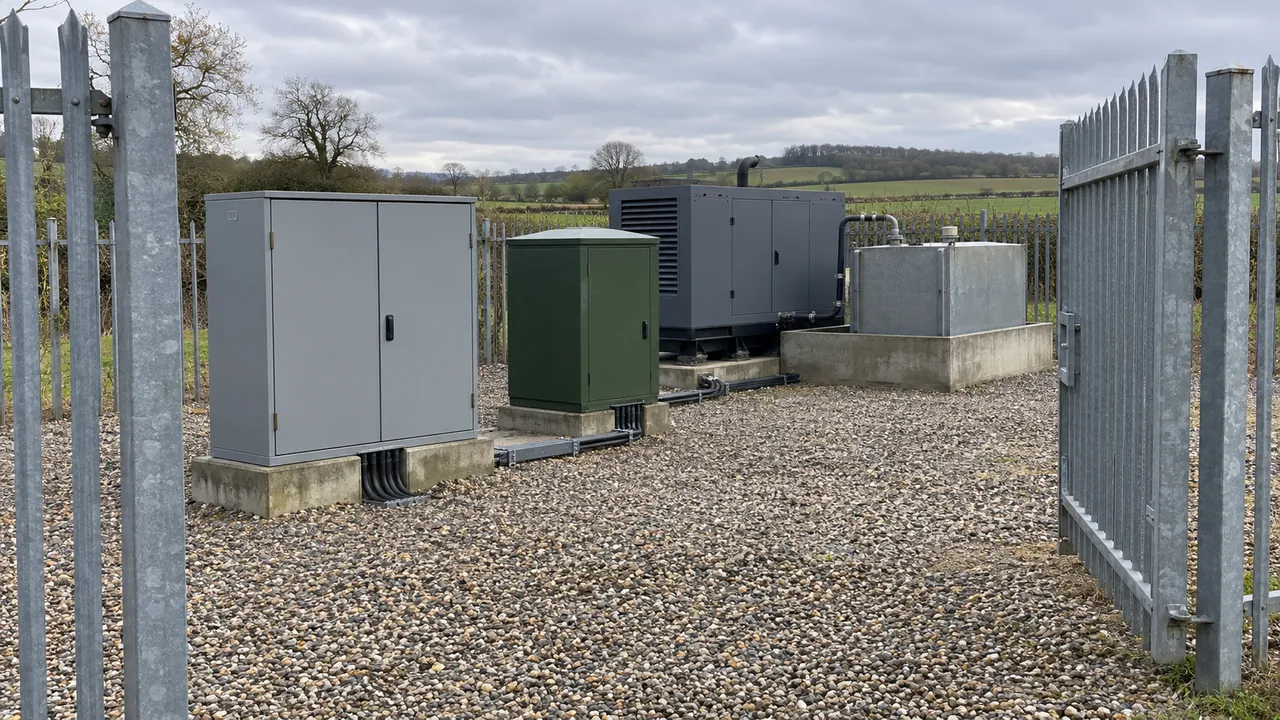
Illustrative photo of an unmanned rural equipment compound with a cabinet, kiosk, standby generator and bunded fuel tank, the kind of remote site a remote asset monitoring system watches

What it is

One complete remote asset monitoring system

Any asset, one system

Plant, tanks, panels, cabins, doors, cold rooms and alarm outputs all report into the same dashboard, whatever each one measures.

Sites with no network

Sensors report over 433 MHz to a gateway on site, which connects over 4G or Wi-Fi with battery backup, so nothing at the asset needs a connection.

Alerts from the dashboard

Limits are set per asset; the dashboard sends alerts by SMS and email to named people, with escalation and a dated record.

Grows with the estate

Add sensors of any type to an existing gateway, and add new sites, without a second system to learn.

Sensors on the assets, a gateway at each site and the dashboard your team works from, designed and built by one UK manufacturer.

A remote asset monitoring system is the sensors, the radio, the gateways and the software that together report the state of equipment and infrastructure spread across many sites. Most organisations end up assembling one from several suppliers: sensors from one, connectivity from another and a dashboard from a third. Ours is one system, designed and built by one team, so every reading arrives in the same place and every part is supported by the people who made it.

Each asset gets the sensor that suits it, chosen from our range of ZARC tags: temperature, pressure, level, leak, power, door state, sound, movement or the alarm output the equipment already has. The tags report over 433 MHz radio, which carries through walls, chambers and metal enclosures where Wi-Fi and mobile signal struggle, to a ZARC Gateway on site. The gateway connects over 4G or Wi-Fi, so the system does not depend on the site's own network.

Everything lands on our own monitoring platform. The dashboard shows every asset on every site, raises alerts when readings cross their limits and sends them by SMS and email, and keeps every reading, alert and acknowledgement as a dated record.

01

Definition

What is a remote asset monitoring system?

A remote asset monitoring system reports the condition and state of equipment and infrastructure from wherever it sits to one central place, so the people responsible can see problems as they happen without visiting the site. It combines sensors fitted to the assets, a way of getting their readings off site, and software that turns those readings into alerts and records. The value comes from seeing the whole estate at once: hundreds of assets across dozens of sites, each with its own limits, on one dashboard.

02

Coverage

What a remote asset monitoring system can watch

The question for each asset is what you need to know about it. For a tank it is the level; for a pump set or a compressor it is whether it is running and whether its alarm output has tripped; for a cold room it is temperature and the door; for an electrical panel it is the supply and the heat; for a cabin or cabinet it is power, temperature and access; for a mast it is sway, wind and lightning. Each of those is a sensor we already make, and where a requirement is new we adapt an existing form factor or build to order.

03

Connectivity

Remote asset monitoring for sites without a network

Assets that need watching are rarely next to a network socket. They sit in plant rooms, chambers, compounds, roof spaces and fields. The sensors carry their own batteries and report one way over 433 MHz radio, which keeps their power draw very low and their range long, to a ZARC Gateway on site. The gateway carries the readings off site over 4G or Wi-Fi, with battery backup so a mains failure is still reported. Nothing joins the site's IT network unless you want it to.

04

Alerts

Asset monitoring alerts that reach the right person

Every reading is checked by the dashboard against the limits set for that asset. When a limit is crossed, or a state changes, the dashboard raises the alert and sends it by SMS and email to the named people for that site, with acknowledgement and escalation to further contacts if the first person does not respond. A sensor that stops reporting raises its own alert, so silence is never mistaken for all clear.

05

Critical assets

Critical asset monitoring across a distributed estate

For critical assets the point is certainty: knowing that the pump, the supply, the cold room or the suppression system is in the state it should be, at every site, now. The dashboard shows every asset's live state and when it last reported, groups assets by site and by type, and keeps a dated history of every reading and alert. That history is the record for insurers, auditors, warranty claims and maintenance planning.

06

Built in the UK

One manufacturer for the whole remote asset monitoring system

We design and manufacture the sensors and gateways in the UK, write their firmware, and build and run the platform behind them. When a reading looks wrong, the team that answers designed the hardware that produced it and the software that displays it. Units are UKCA marked, and monitoring is charged per sensor and per gateway each month, with no licence, seat or alert charges.

Deployment approach

Start with the assets that matter most, then grow the system site by site.

A remote asset monitoring system begins with a survey of the assets you need to see and what each one needs to report.

We survey the sites, confirm the sensor each asset needs and where the gateway should sit, then fit the sensors and configure limits, alert routing and escalation on the dashboard. A proof of concept on a small number of assets comes first; once it is proven, the same pattern rolls out across more assets and more sites on the same platform.

Survey

Walk the sites, list the assets and confirm what each needs to report and where the gateway sits.

Site survey

Fit

Sensors retrofit to the assets with no rewiring and no site network; one ZARC Gateway per site.

Sensors fitted

Configure

Set limits per asset, alert contacts per site, escalation, and the dashboard views each team needs.

Dashboard set

Prove

Confirm readings and alerts reach the right people on the first assets before the pattern is scaled.

Proof of concept

Scale

Add assets and sites to the same gateways and the same dashboard as the estate grows.

Estate rollout

Bring the list of assets and sites you need to see. We will scope a practical proof of concept around them.

Book a site survey

Where it applies

Where assets are spread across sites nobody can watch all of.

Utilities and infrastructure

Pumps, tanks, kiosks, meters and supplies across compounds and chambers, with one view of every site.

Telecoms estates

Power, temperature, access and structure across cabins, cabinets and masts on unmanned sites.

Buildings and property portfolios

Plant rooms, boilers, water systems, supplies and empty units across every building in the portfolio.

Industrial and manufacturing sites

Compressors, lines, tanks, panels and machine alarm outputs across one or many production sites.

Cold chain and food

Cold rooms, freezers and chilled cabinets across stores, kitchens and distribution sites.

Hire fleets and temporary works

Tanks, welfare units, pumps and temporary power that move from site to site with the equipment.

Related pages

FAQ

Frequently asked questions

What is a remote asset monitoring system?

A remote asset monitoring system reports the condition and state of equipment and infrastructure from wherever it sits to one central dashboard, so problems are seen as they happen without anyone visiting the site. Ours has three parts: wireless sensors on the assets, a ZARC Gateway at each site, and our own monitoring platform, which raises alerts and sends them by SMS and email to the people responsible.

What kinds of assets can it monitor?

Almost anything with a reading or a state worth knowing: plant and pumps, tanks and vessels, electrical panels and supplies, cabins and cabinets, doors and gates, fridges and cold rooms, suppression and alarm systems, masts and structures. Where equipment already has an alarm or status output, a sensor reads that output directly.

Does it work on sites with no network or no mains power at the asset?

Yes. The sensors are battery powered and report over 433 MHz radio to a ZARC Gateway on site, which carries the readings off site over 4G or Wi-Fi and has battery backup of its own. Nothing at the asset needs a network connection or a power supply.

How are alerts sent?

Every reading goes to the dashboard, which checks it against the limits set for that asset. When a limit is crossed, the dashboard raises the alert and sends it by SMS and email to the named people for that site, with escalation to further contacts if the first person does not respond. A sensor that stops reporting raises its own alert.

Can we start small and add assets and sites later?

Yes. Most systems start with the assets that matter most on one or two sites. Once a gateway is in place, further sensors of any type join it and appear on the same dashboard, and new sites are added the same way.

Is this the same as asset condition monitoring?

Asset condition monitoring is one part of it: the health of individual pieces of equipment that run unattended. A remote asset monitoring system covers the whole estate, with many types of asset across many sites seen from one place.

How long does it take to deploy?

A proof of concept comes first, on a small number of assets, then production. Because the sensors retrofit to equipment already in place, with no rewiring and no site network, the fitting itself is quick once the survey has confirmed what each asset needs.

Every asset, every site,
on one dashboard.

Tell us about the assets you need to see and the sites they sit on. We will scope a remote asset monitoring system around them, starting with a survey and a proof of concept on the assets that matter most.

Location

Venator House, Unit 9, 15-17 St Stephen's Road, Bournemouth

Dorset, BH2 6LA · VAT GB 409644484

Remote asset monitoring enquiry

Tell us about the assets, the number of sites, what you need to know about each one and how alerts should reach your team.

No mailing lists. No spam. We reply directly to your enquiry.