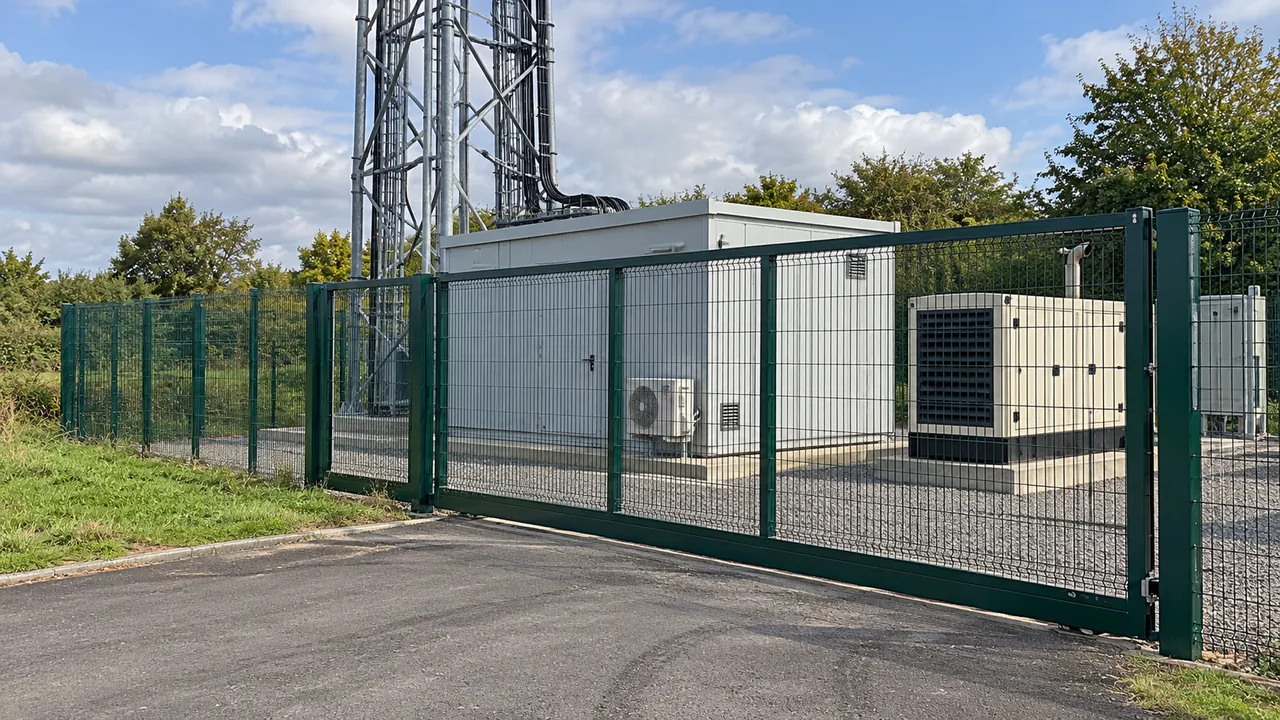
Perimeter security monitoring detects a boundary event quickly, classifies it with enough confidence to act, and triggers a response before damage, theft or disruption escalates.
Critical sites fail at the edges. Fences are cut, gates are forced, cabinets are opened, cable routes are disturbed, compounds are entered out of hours, and remote assets are targeted because attendance is slow and evidence is weak. Traditional security often leaves teams with either too much footage or too little context. Perimeter monitoring should create priority: a small number of high-quality signals that show where the event happened, what changed and how urgent it is.
IoT Technologies designs site security around layered sensing. Fence breach detection, PIR motion, piezoelectric fence sensing, vibration, tilt, magnetic contacts, cabinet tamper, gate status, acoustic indicators and asset-level sensors can all contribute to a clearer event picture. The point is not to install every sensor everywhere. The point is to place the right sensors at the attack paths, access points and vulnerable zones where response time and evidence matter.
433 MHz telemetry can be highly practical for perimeter and compound security when the site is surveyed correctly. Many UK infrastructure locations have weak Wi-Fi, no convenient power, awkward structures, metalwork, cabinets, remote fence lines and exposed outdoor positions. Low-power 433 MHz devices can report breach, tamper, contact, vibration and motion events from battery-operated sensors without requiring local IP networking at every point. It still needs RF planning, antenna positioning, range checks and interference review, but it gives a strong route for long-life field sensing.
False-alarm control matters. A fence vibration event caused by wind is not the same as a repeated cut pattern. PIR motion at the wrong time is different from expected authorised access. Piezoelectric sensing, vibration thresholds, timing windows, zone correlation, gateway evidence and acknowledgement workflows help distinguish background noise from response-worthy events. The system should reduce noise and increase confidence, not create another dashboard nobody trusts.
For critical infrastructure, the response chain is as important as the sensor. A high-severity perimeter breach may need immediate notification, escalation to on-call teams, security contractor dispatch, camera review, internal incident logging or evidence preservation. A lower-severity event may need watch status or maintenance follow-up. The platform should route events based on site, zone, severity and operational responsibility.
Dashboards must show action, not theatre. Operations teams need to see site state, active events, affected zones, acknowledgement status, last contact, device battery, gateway health and event timelines. Management teams need portfolio visibility across sites, regions and suppliers. Investigators need a defensible record that shows what happened, when it happened, who was alerted and how the response unfolded.
This page describes monitoring and operational security support. It does not guarantee prevention of intrusion, theft, sabotage or damage, and it does not replace physical security assessment, certified alarm systems, guarding, policing or statutory obligations. Its value is in strengthening early detection, response discipline and evidence across hard-to-monitor sites.