
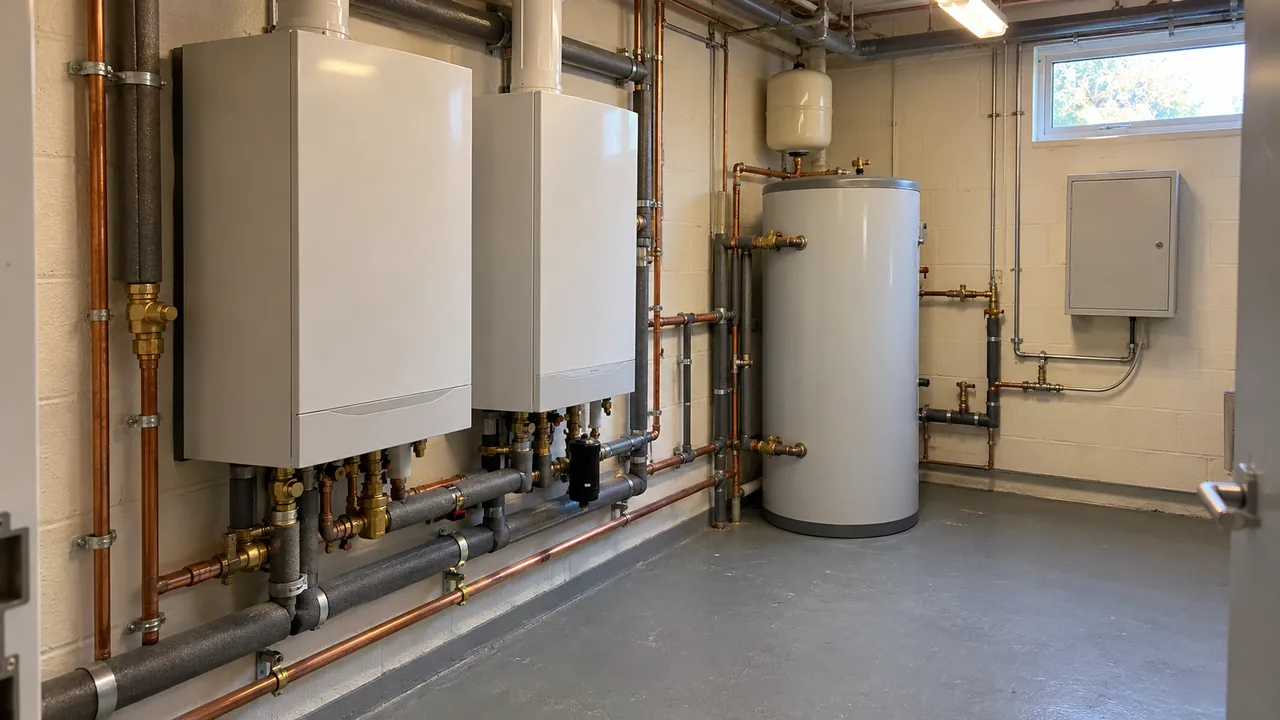
Retrofit remote monitoring for existing equipment

Retrofit remote monitoring adds real-time alerting to equipment that is already installed and working, using the fault and status signals the equipment already produces. A battery-powered wireless transmitter connects to a spare dry contact or reads the state the equipment presents, and from that moment every change reports one way to a live dashboard and as an instant email or SMS alert.

Nothing is rewired, nothing is redesigned, and no control path is created into the equipment. The kit you have keeps doing its job; the difference is that somebody now finds out when it acts.

Retrofit remote monitoring — wireless transmitter fitted to existing equipment reporting a state change to a live dashboard

The unattended site

Equipment that only tells the room it sits in.

No rewiring, no redesign

The transmitter connects across an existing volt-free contact pair or reads a quantity the equipment already exposes. Nothing is rewired, nothing is redesigned, and no control path is created into the equipment.

Dry contact in, dashboard out

A self-contained wireless transmitter placed across an existing contact pair reports the state change the moment it happens — a timestamped alert to the people on cover and a permanent entry in the asset's record.

Analogue equipment included

A sensor tag reads the physical quantity the equipment already exposes — a pressure, a level, a temperature or a simple open-or-closed state — and digitalises it into the same one-way telemetry stream.

One-way by design

Telemetry flows one way to the dashboard. There is no return path, no command channel and no mechanism through which the monitoring can operate, adjust or interfere with the equipment it observes.

Most of the equipment installed across UK industry was designed to tell someone standing in front of it.

A suppression system deploys and a gauge drops. A pump trips and a lamp comes on. A generator fails its self-test and a fault code sits on a panel in a plant room nobody enters until the next scheduled visit. The equipment did exactly what it was built to do, and announced it precisely, to a room with nobody in it.

That is the real meaning of remote in remote monitoring. The site does not have to be distant; it only has to be unattended at the moment something happens, which describes almost every site for most of every week. The signal exists. It simply dies within arm's reach of the equipment that raised it. Retrofit monitoring carries that signal the rest of the way, without asking anyone to replace equipment that works.

The traditional answer has been to work around the gap with routine: walk-rounds, weekly gauge readings, a clipboard by the plant-room door. Those routines are honest work, but they sample the estate rather than watch it, and the expensive events do not schedule themselves between visits. The alternative most sites assumed they faced was a wholesale replacement programme, with connected equipment, new wiring and capital sign-off. Retrofit equipment monitoring removes that false choice: the monitoring arrives as a survey and a fitting, asset by asset, at a cost that makes sense for a single pump as readily as for a whole estate.

01

Dry contacts

Dry contact in, dashboard out

The most direct retrofit path is the dry contact. Generators, pumps, compressors, UPS units, suppression panels and building management systems almost all ship with volt-free contact outputs that open or close when a condition changes, and on most sites those terminals were never wired to anything. Dry contact monitoring places a self-contained wireless transmitter across that existing pair. The transmitter is electrically passive, draws nothing from the equipment, and reports the state change the moment it happens. From the equipment's point of view nothing has been added at all. From yours, a contact closure that used to light a lamp now produces a timestamped alert to the people on cover and a permanent entry in the asset's record. We have written in more depth about what a dry contact is and why the signal usually dies at the panel; the short version is that the hardest part of monitoring, deciding what constitutes a fault and detecting it, was engineered into the equipment by its manufacturer, and you already paid for it.

02

Analogue equipment

Analogue equipment monitoring

A large amount of valuable equipment predates any notion of connectivity: pressure gauges, float switches, mechanical counters, dial thermometers, suppression cylinders with a needle that somebody reads on a walk-round. Analogue equipment monitoring is the same retrofit principle applied to that estate. A sensor tag reads the physical quantity the equipment already exposes, whether that is a pressure, a level, a temperature or a simple open-or-closed state, and digitalises it into the same one-way telemetry stream as everything else. This is what making existing equipment smart actually looks like in practice. It does not mean replacing analogue plant with connected plant, and it does not mean an integration project. It means the state changes that already happen inside your equipment become events on a dashboard, with the analogue kit itself entirely untouched. A gauge that was read weekly becomes a value that is watched continuously, and the excursion that used to be discovered on a Monday is known in the minute it occurs.

03

Providers and OEMs

For equipment providers and OEMs

If you manufacture, supply or maintain equipment, the limitation is one you will recognise: your product indicates locally, and your customer's site is unattended. When your equipment acts correctly out of hours, the customer experiences it as a failure of visibility, and you hear about it as a support call days later. Retrofit remote monitoring closes that gap without touching your product. The transmitter sits on the contact or reading your equipment already provides, telemetry flows one way to the dashboard, and your equipment's own operation, certification and controls remain exactly as you shipped them. For a provider, that is a rare kind of upgrade. It can be offered across an installed base rather than only on new sales, it creates an ongoing monitoring relationship around equipment that was previously a one-time transaction, and it differentiates a tender without a redesign cycle. Because the monitoring is receive-only from your equipment's perspective, there is no path through which it can drive, command or interfere with what you supply. We work with providers to survey a representative installation, prove the retrofit on real kit, and then repeat it across the estate.

04

Coverage

What retrofit monitoring covers

The pattern is the same wherever there is a state worth knowing about. Suppression systems that indicate discharge or pressure loss on a local gauge. Pumps and compressors with trip and common-fault relays. Standby generators with fail-to-start and low-fuel contacts. UPS systems that fall onto battery. Cabinet doors, sump floats, tank levels and temperature limits. In every case the event is a state change, the reporting is one-way telemetry, and the install is a survey and a fitting rather than a project. Where equipment relates to fire, gas or life safety, our monitoring operates on a complementary, best-endeavours basis alongside the systems and procedures that carry that responsibility; it reports what the equipment signals, and it does not detect fire, smoke or heat itself.

Deployment approach

A survey and a fitting, not a project.

A retrofit survey is short and specific: what equipment you have, what signals it already presents, and what an alert needs to reach.

We survey a representative installation, prove the retrofit on real kit, and then repeat it across the estate. The transmitter attaches to outputs the equipment already has, so no mains supply, network cabling or change to the equipment's own wiring or controls is needed.

Survey

Confirm what equipment you have, what signals it already presents, and what an alert needs to reach.

Site survey

Fit

A wireless transmitter or sensor tag is fitted to the equipment's existing dry contact, gauge point or state output.

Transmitter fitted

Configure

Set how each state change reaches the people on cover — dashboard, email or SMS — the moment it happens.

Alerts set

Prove

Prove the retrofit on real kit at a representative installation before it is repeated anywhere else.

Pilot proven

Scale

Repeat the same fitting across the estate or the installed base, with every point reporting into one live view.

Estate rollout

Bring the equipment list and what each panel, gauge or contact already presents. We will scope the retrofit and quote per project.

Book a survey

Where it applies

Where existing equipment already produces the signal.

Suppression systems

Systems that indicate discharge or pressure loss on a local gauge report the event the moment it happens.

Pumps and compressors

Trip and common-fault relays become timestamped alerts to the people on cover, not lamps in an empty room.

Standby generators

Fail-to-start and low-fuel contacts report the failed self-test that used to sit on a panel until the next visit.

UPS systems

A UPS that falls onto battery is known in the minute it occurs, not discovered at the next scheduled visit.

Doors, floats, tanks and temperatures

Cabinet doors, sump floats, tank levels and temperature limits — wherever there is a state worth knowing about.

Equipment providers and OEMs

Offered across an installed base rather than only on new sales, creating an ongoing monitoring relationship without a redesign cycle.

FAQ

Frequently asked questions

What is retrofit remote monitoring?

Retrofit remote monitoring is the addition of real-time alerting to equipment that is already installed, using the fault, status and reading outputs the equipment already produces. A battery-powered wireless transmitter or sensor tag is fitted to the equipment's existing dry contact, gauge point or state output, and every change is reported one way to a live dashboard and as an instant email or SMS alert. The equipment itself is not rewired, modified or replaced.

Does retrofit monitoring require rewiring or modifying the equipment?

No. The transmitter connects across an existing volt-free contact pair or reads a quantity the equipment already exposes, and it is electrically passive: it imposes no voltage, draws no power from the equipment, and has no path to control it. It runs on its own battery and reports by low-power radio, so no mains supply, network cabling or change to the equipment's own wiring or controls is needed.

What is a dry contact, and why does it matter for retrofit?

A dry contact, also called a volt-free contact, is a switch output fitted as standard to most industrial and building plant. It opens or closes when a condition changes, such as a fault, trip, run state or power loss, without carrying any voltage of its own. It matters for retrofit because it is a monitoring point the manufacturer already engineered and tested; fitting a wireless transmitter to it turns an existing signal into a real-time alert with no changes to the equipment.

Can analogue equipment be monitored remotely?

Yes. Analogue equipment such as pressure gauges, float switches, dial thermometers and mechanical indicators can be monitored by fitting a sensor tag that reads the same physical quantity the equipment displays and digitalises it into one-way telemetry. The analogue equipment continues to operate exactly as before; the difference is that its readings and state changes now appear on a live dashboard with alerts, instead of only being seen when somebody stands in front of it.

Does the monitoring send anything back to the equipment?

No. The system is one-way telemetry only. Sensor tags report state changes and readings outbound to the platform; there is no return path, no command channel and no mechanism through which the monitoring can operate, adjust or interfere with the equipment it observes. This is a deliberate property of the design: monitored equipment behaves identically to unmonitored equipment in every respect except that its events are now seen.

Which equipment providers is this suited to?

Retrofit remote monitoring suits any provider whose equipment indicates locally: suppression system suppliers, pump and compressor manufacturers, generator and UPS providers, and maintainers of plant with panel lamps, gauges or fault relays. Because the monitoring attaches to outputs the equipment already has and creates no control path into it, it can be offered across an existing installed base without a product redesign, recertification of the equipment's own functions, or changes to how the equipment is supported.

Most estates are surrounded by usable signals
and capture none of them.

A retrofit survey is short and specific: what equipment you have, what signals it already presents, and what an alert needs to reach. Book a survey and we will show you, on your own equipment, how little needs to change.

Location

Venator House, 15-17 St Stephen's Road, Bournemouth

Dorset BH2 6LA · VAT GB 409644484

Retrofit remote monitoring enquiry

Tell us about the equipment you already run, the signals it presents and how alerts should reach your team.

No mailing lists. No spam. We reply directly to your enquiry.