
Fire suppression monitoring that reports the moment it deploys

A suppression system does its job in seconds, and it does it silently. Whether it protects a server room, a plant enclosure or a forklift working a warehouse floor, the system deploys and nothing tells anyone. Our battery-powered tags fit to the suppression equipment you already have and report the discharge, the pressure drop or the fault the moment it happens.

IoT Technologies monitors fire suppression systems so that a deployment, a leaking cylinder or a readiness fault is an alert on a dashboard within moments, not a discovery at the next inspection. The tags retrofit to fixed installations and mobile plant alike, and nothing about the suppression system itself is modified.

Illustrative fire suppression monitoring dashboard showing a discharge event alert and low cylinder pressure reported by a tag fitted to a suppression system.

What it is

Retrofit monitoring that reports discharge, pressure and faults in real time.

Reports the moment it deploys

The tag detects the state change when the system deploys and transmits it immediately, so the discharge reaches the dashboard and the right people by email or SMS while it still matters.

Live cylinder pressure

Cylinder pressure is read continuously against its expected band — a sudden loss raises an immediate alert, and a slow decline over weeks is surfaced early with the trend history behind it.

Fixed systems and mobile plant

The same tags fit cylinder banks and fixed installations, and suppression on forklifts, loaders and other working plant — reporting a discharge wherever the machine is working on site.

Retrofit, nothing modified

The tag reads what the system already exposes — a pressure line, a pressure switch, a dry or volt-free contact — with no rewiring, no mains dependency and no change to the system's certification or operation.

Our battery-powered tags fit to the suppression equipment you already have and report the discharge, the pressure drop or the fault the moment it happens — with nothing about the suppression system itself modified.

Most suppression systems spend their whole service life in places nobody watches: plant rooms, enclosures, roof spaces, vehicle engine bays. The tag reads what the system already exposes, typically cylinder pressure or a pressure switch, and transmits any discernible change — a discharge, a pressure drop, a slow leak, a fault condition — as an alert on a real-time dashboard with a timestamped record of what happened and when.

When a suppression system operates, it is usually the only witness. A discharge alert closes that gap, reaching the right people by email or SMS while it still matters, and the timestamped event gives maintenance and insurance conversations a clean record of exactly when the system operated. Readiness is watched the same way: cylinder pressure is read continuously against its expected band, so a sudden loss raises an immediate alert and a developing leak becomes a maintenance job rather than a readiness failure.

This is equipment monitoring, and it is deliberately nothing more. The tags do not detect fire, smoke or heat, and the system is not a fire alarm or a certified life-safety installation. Statutory inspection, certified maintenance and fire-safety responsibilities remain exactly as they are; monitoring strengthens the visibility between those obligations rather than replacing any of them.

01

Definition

What is fire suppression monitoring?

Fire suppression monitoring uses small, battery-powered sensor tags fitted to suppression systems to report their state in real time. The tag reads what the system already exposes, typically cylinder pressure or a pressure switch, and transmits any discernible change: a discharge, a pressure drop, a slow leak, a fault condition. Each event arrives as an alert on a real-time dashboard with a timestamped record of what happened and when. The remote in fire suppression remote monitoring means unattended rather than distant. Most suppression systems spend their whole service life in places nobody watches: plant rooms, enclosures, roof spaces, vehicle engine bays. Automatic fire suppression monitoring exists so that a system in any of those places can tell someone the moment its state changes, without a person standing next to it.

02

The unseen discharge

The discharge nobody sees

When a suppression system operates, it is usually the only witness. The agent discharges, the protected risk is dealt with, and the system sits empty until somebody happens to look at it. Inside the enclosure of a CNC machine or on an unmanned site, that can be days. In the meantime the asset it protected has no protection at all, and nobody responsible knows it. A fire suppression discharge alert closes that gap. The tag detects the state change when the system deploys and transmits it immediately, so the discharge appears on the dashboard and reaches the right people by email or SMS while it still matters. The event is logged with its timestamp, which also gives maintenance and insurance conversations a clean record of exactly when the system operated.

03

Pressure and readiness

Fire suppression pressure monitoring

Discharge is the loudest event in a suppression system's life, but readiness is lost quietly. Cylinder pressure drifts, a valve weeps, a bank is left partially depleted after service work, and the loss is invisible between manual checks. A pressure drop the day after an inspection can sit unnoticed until the next one. Fire suppression pressure monitoring reads cylinder pressure continuously against its expected band. A sudden loss raises an immediate alert. A slow decline over weeks is surfaced early, with the trend history behind it, so a developing leak becomes a maintenance job rather than a readiness failure. Every reading builds the pressure history of each cylinder, which makes service visits better informed before anyone arrives.

04

Mobile plant

Suppression on mobile plant and vehicles

The least-watched suppression systems are the ones that move. Across a large distribution warehouse, forklifts, loaders and other working plant carry suppression on the engine bay or hydraulic compartment precisely because a fire there develops fast — and yet a discharge mid-shift can pass completely unnoticed from the driving position. The machine keeps working, the system is spent, and the protection is gone until someone physically checks. Tags fitted to vehicle suppression systems report a discharge the moment it happens, wherever the machine is working on site. The event reaches the dashboard and the right people in real time, so a vehicle whose system has operated can be stood down, inspected and recharged the same shift instead of running unprotected.

05

Retrofit

Retrofit to the system you already have

Monitoring attaches to the suppression system without modifying it. The tag reads what the system already exposes: a pressure line, a pressure switch, a dry or volt-free contact. Fire system pressure switch monitoring in particular needs nothing more than the switch the manufacturer already fitted. There is no rewiring, no mains dependency and no change to the system's certification or operation, and the tags run for years on internal batteries over low-power radio, so coverage does not depend on site Wi-Fi or cellular signal reaching a plant room or an engine bay.

06

Scope, honestly

Complementary by design

This is equipment monitoring, and it is deliberately nothing more. The tags do not detect fire, smoke or heat, and the system is not a fire alarm or a certified life-safety installation. It watches the suppression equipment's own state, pressure, discharge, fault, and makes that state visible to the people responsible. Statutory inspection, certified maintenance and fire-safety responsibilities remain exactly as they are; monitoring strengthens the visibility between those obligations rather than replacing any of them. That honesty is the point: the suppression system does the protecting, and the monitoring makes sure its state is never a surprise.

Deployment approach

Start with a survey of the systems you already run, then fit the tags.

Monitoring begins with the suppression systems you already have, fixed and mobile, and the events you need to see.

We survey the suppression systems you want visibility of and confirm what each one exposes — a pressure line, a pressure switch, a dry or volt-free contact — then fit the tags and configure pressure bands, alert routing and escalation. Because the tags retrofit without modifying the system, installation is quick and does not affect certification or operation.

Survey

Look at the suppression systems you want visibility of, fixed and mobile, and confirm what each one exposes.

Site survey

Fit

Battery-powered tags attach to the suppression equipment without modifying it — no rewiring and no change to certification or operation.

Tags fitted

Configure

Set pressure bands and state rules, alert routing by dashboard, email or SMS, and escalation if an alert is not acknowledged.

Alerts set

Prove

Confirm discharge and pressure events are captured and alerts reach the right people before the pattern is scaled.

Pilot proven

Scale

Roll the same pattern across more systems, buildings and mobile plant, all reporting into one live view.

Estate rollout

Bring the suppression systems you need visibility of, fixed or mobile. We will scope a practical monitoring pilot and quote per project.

Book a site survey

Where it applies

Where a silent suppression system needs to tell someone.

Cylinder banks and fixed installations

Live pressure and discharge state across cylinder banks, with a pressure history per cylinder that makes service visits better informed before anyone arrives.

Forklifts and mobile plant

Suppression on the engine bay or hydraulic compartment of working plant reports a discharge mid-shift, so the machine can be stood down, inspected and recharged the same shift.

CNC and machine enclosures

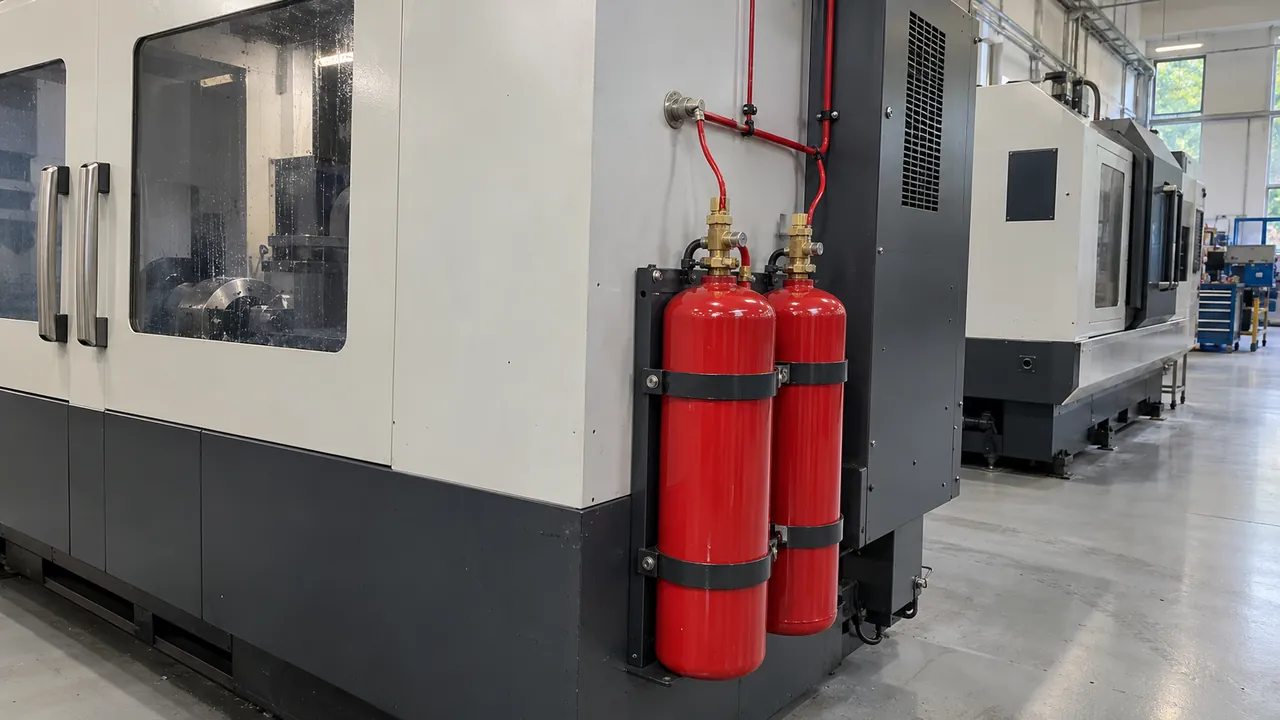
Inside the enclosure of a CNC machine a discharge can go unseen for days. A tag reports it the moment the system operates.

Server and comms rooms

Suppression protecting server rooms reports a discharge, a pressure drop or a fault the moment it happens, not at the next inspection.

Plant rooms and enclosures

Systems that spend their service life in places nobody watches — plant rooms, enclosures, roof spaces — can tell someone the moment their state changes.

Equipment providers

A suppression provider whose systems indicate only on site can fit tags at installation and offer their customers real-time discharge and pressure alarms as part of the product.

FAQ

Frequently asked questions

What is fire suppression remote monitoring?

It is battery-powered sensor tags fitted to suppression systems, reporting discharge events, cylinder pressure and fault states in real time to a dashboard, with alerts by email or SMS. Remote means unattended: the system can tell someone its state has changed without anyone being on site.

How do discharge alerts work?

The tag reads the suppression system's state, typically through its pressure line or pressure switch. When the system deploys, the state change is transmitted immediately and arrives as a timestamped alert on the dashboard and with the people responsible, while the event still matters.

Does it detect fire?

No. The tags do not detect fire, smoke or heat, and this is not a fire alarm or a certified life-safety system. It monitors the suppression equipment's own state, such as pressure and discharge, so faults and deployments are visible between inspections.

Does it replace statutory inspection and maintenance?

No. Monitoring is complementary and best-endeavours: it strengthens visibility between inspections, but it does not replace certified maintenance regimes, statutory inspection or your fire safety responsibilities.

Can it monitor suppression systems on vehicles and mobile plant?

Yes. Tags fit to suppression systems on forklifts, loaders and other working plant and report a discharge the moment it happens, wherever the machine is on site, so a vehicle running with a spent system is flagged the same shift rather than found at a later check.

How do we get started?

With a site survey. We look at the suppression systems you want visibility of, fixed and mobile, confirm what each one exposes, and quote per project. Because the tags retrofit without modifying the system, installation is quick and does not affect certification or operation.

Know the moment
a system deploys.

Tell us about the suppression systems you need visibility of, fixed or mobile, and what each exposes. We will scope a practical monitoring pilot and quote per project — the tags retrofit to the systems you already run.

Location

Venator House, 15-17 St Stephen's Road, Bournemouth

Dorset BH2 6LA · VAT GB 409644484

Fire suppression monitoring enquiry

Tell us about the suppression systems, fixed and mobile, the events you need to see and how alerts should reach your team.

No mailing lists. No spam. We reply directly to your enquiry.