01
Estate blind spots
Monitor the spaces routine inspections cannot continuously cover.
Plant rooms, risers, basements, rooftops, comms cupboards, cold rooms and utility areas can all hold early signals that are missed between visits.

Facilities management IoT monitoring for every building on the contract, retrofitted without a BMS or wiring: tags report plant, water, power, security and maintenance events, and the dashboard alerts your team or contractor by SMS or email and keeps a record for every handover.
Every building on the contract gets the same set-up: sensors where they are needed, a gateway, and a dashboard your team and your contractors share. Alerts go to the named person for each site and escalate if they are not acknowledged, and the history is there when the contract is reviewed or handed over.
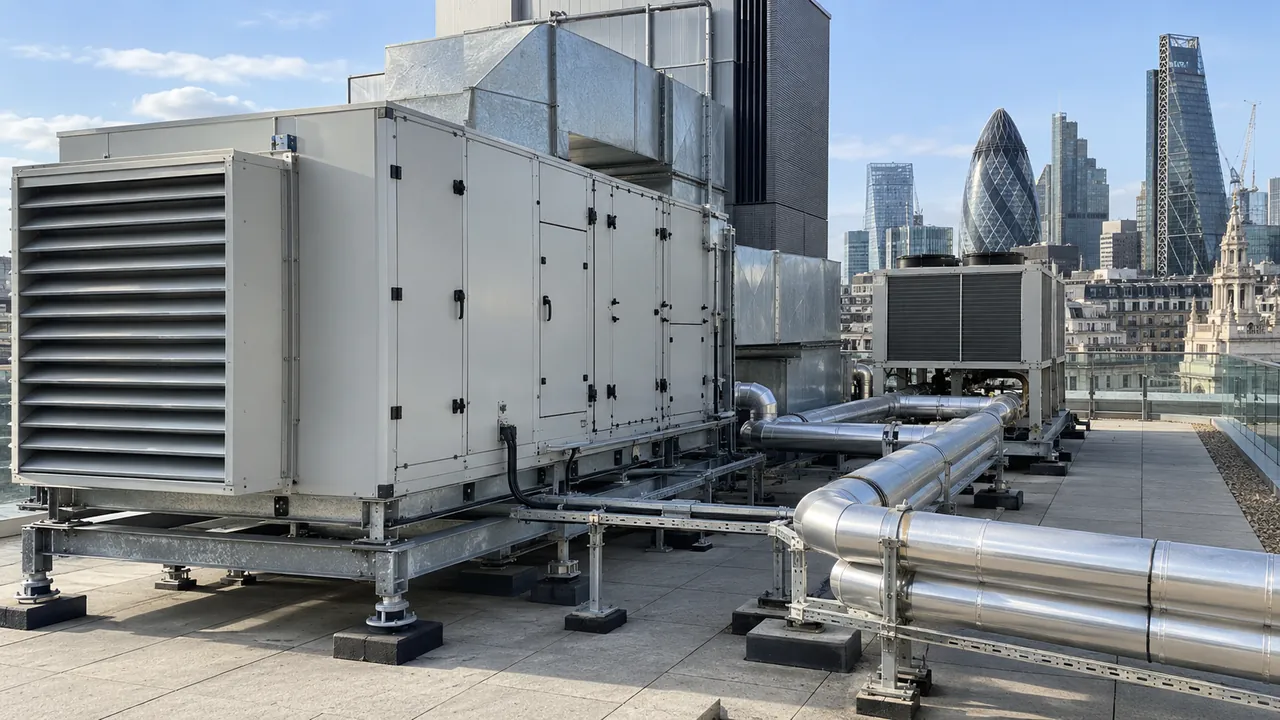
Facilities estate visibility
Add low-power sensing across plant rooms, risers, basements, utility spaces and hard-to-reach estate areas without forcing a full BMS replacement.
Surface abnormal access, moisture risk, drift, state change, non-response and device-health events with practical routing and acknowledgement.
Create event histories, handover context and response records that help internal teams and third parties work from the same evidence.
Use repeatable thresholds, reports and commissioning patterns across managed buildings while still respecting site-specific constraints.
Leaks, plant faults, temperature drift and doors left open are reported when they happen, and the alert reaches the contractor with the reading attached.
Facilities teams and property operators are responsible for mixed estates with different buildings, contractors, systems, asset ages and access constraints. Plant rooms, risers, basements, rooftops, cold rooms, utility spaces, comms cupboards, lift plant and security zones all carry operational risk, but many remain difficult to monitor continuously.
Traditional building systems often cover part of the picture. They may not reach every cupboard, valve, leak tray, cabinet, meter, temporary plant area or out-of-hours access point. A retrofit IoT sensing layer can complement existing systems by collecting practical exception signals from the places where expensive incidents often start.
Useful facilities monitoring is not about adding another noisy dashboard. It is about knowing what changed, whether it matters, who needs to respond and what evidence remains afterwards. That might include abnormal temperature, humidity, moisture risk, water ingress, flow, pressure, access, tamper, equipment state, battery health or gateway delivery.
Coverage is engineered around real estate conditions. Tags transmit over 433 MHz, which carries well through building fabric, to a ZARC Gateway that connects over 4G or Wi-Fi, with satellite backhaul on request. Where a site already runs 868 MHz equipment, the deployment can integrate with it.
Facilities value often comes from exception-first operations. A facilities team does not need every reading to become a task. They need severity, location, asset context, escalation ownership and acknowledgement records so they can respond to the right event without increasing noise.
Water and utility assurance is a common starting point. Meter readings, flow patterns, leak trays, pressure signals, valve states, water-risk alerts and plant-room conditions can help teams prioritise attendance before an issue becomes damage, waste or tenant disruption. Units standing vacant between tenancies carry the same risks with nobody on site to see them start, and vacant property monitoring covers escape of water, entry and frost until the next tenant moves in.
Plant and electrical resilience also benefit from independent signals. Chillers, condensers, boilers, pumps, AHUs, switchboards, UPS areas, comms risers, panels and control cabinets can all produce small condition changes before the visible failure. Monitoring helps teams decide whether to inspect, dispatch, escalate or watch the trend.
Contractor handover improves when the evidence is clear. If a third party attends site, they need the event timeline, asset location, what changed, what has already been acknowledged and what state remains after attendance. That reduces ambiguity, repeat visits and disputes about what happened.
The strongest facilities deployments begin with a representative building, zone or risk group. We map the assets, confirm coverage and power, configure thresholds and event routing, prove the evidence value, then scale the pattern across sites with consistent reporting and support.
Estate blind spots
Plant rooms, risers, basements, rooftops, comms cupboards, cold rooms and utility areas can all hold early signals that are missed between visits.
Plant and utilities
Meters, valves, leak trays, pumps, boilers, AHUs, condensers, switchboards, UPS areas and control cabinets can be monitored where useful signals and safe installation conditions exist.
Access and state
Door, cabinet, riser, plant-room and tamper signals can support security, maintenance and contractor handover workflows.
433 MHz radio
433 MHz coverage is assessed around building fabric, gateway placement, payload, battery and maintenance access.
Evidence-grade timelines
Event histories, acknowledgements, device health, gateway delivery and response notes help teams review incidents, insurers, audits and contractor performance.
Portfolio reporting
Consistent rules and reporting help facilities leaders see repeat issues, high-risk spaces, avoided callouts and the sites that need preventive attention.
Deployment approach
A useful facilities monitoring pilot starts with the spaces, assets and incidents that create operational cost.
We map the estate, prioritise plant, utility, access and environmental risks, survey coverage and power, configure alert routing and evidence records, prove value in a representative pilot, then scale the pattern across additional buildings and contractor workflows.
Define buildings, zones, plant rooms, utilities, access points, contractor workflows, alert owners and evidence requirements.
Define estate
Check mounting, access, power, 433 MHz coverage, gateway placement, a 4G or Wi-Fi connection and site restrictions.
Map coverage
Set thresholds, trend rules, alert severity, acknowledgement routes, contractor handover records and dashboard views.
Tune events
Run representative assets and spaces through pilot acceptance, checking signal quality, alert usefulness and evidence value.
Pilot proof
Roll the proven pattern across additional buildings, zones, contractors and reporting groups with consistent commissioning.
Portfolio rollout
Bring the estate map, risk list, contractor workflow, current blind spots and reporting needs. We will shape a facilities monitoring pilot around measurable operational control.
Plan a facilities monitoring pilotApplications
Monitor water risk, temperature, humidity, pumps, valves, utility meters and support assets where failures create costly callouts.
Add visibility to constrained spaces where leaks, access events, moisture and environmental drift can develop unnoticed.
Watch the condition of chillers, condensers, AHUs, switchboards, UPS spaces, panels and control cabinets.
Give third-party teams event context, asset location and response history before attendance and preserve records afterwards.
Support evidence records for water-risk monitoring, access reviews, incident timelines and governance reporting without overclaiming statutory outcomes.
Create consistent exception reporting across buildings, landlords, managing agents, operators and regional maintenance teams.
Counts pulses from a meter you already have, with leak and no-flow alerts.
Reports CO2 in ppm, the plain measure of whether a room is ventilated.
Reports lux, for failed lighting, lights left on and dark spaces opened.
Differential air pressure monitoring tag
Reports the pressure across filters and fans, or between a room and a corridor.
Commercial kitchen emissions monitoring
Real-time grease and particulate monitoring across kitchen extract, with filter alerts and a logged trend.
Estate-wide visibility, contractor handover, dashboards and exception alerts across distributed sites.
Water leak detection, alerts and evidence trails for estates, buildings and high-risk spaces.
Automated Legionella Compliance
Temperature evidence, flushing records, alerts and compliance-support reporting for managed estates.
Dashboards, evidence trails, alert records, APIs and secure operational data handling.
Custom device, gateway and reporting design shaped around unusual building and estate workflows.
Sensor, firmware, radio, antenna and gateway engineering for low-power telemetry in difficult buildings.
Connected building operations where sensors, access events, plant signals and data paths improve control.
Monitoring and evidence workflows for estates where uptime, safety and assurance carry high operational importance.
Local Government and Public Sector Estates
Multi-site visibility, governance reporting and contractor workflow support for public-sector estates.
FAQ
It turns plant, utility, access and environmental signals across the estate into actionable alerts and evidence, so FM teams respond earlier, cut repeat callouts and walk into meetings with records rather than recollections.
Plant rooms, risers, basements, rooftops, utility spaces and security zones — the parts of a building portfolio where problems start and where nobody is routinely standing.
Events, attendance and responses are timestamped, giving FM teams handover records and accountability evidence for contractor work, SLA conversations and client reporting.
Yes. Different buildings, ages and uses report into one consistent view, so portfolio-level reporting and site-level alerting come from the same system.
With a retrofit pilot on priority sites: low-power wireless sensors install without major works, prove the alert and evidence workflow, then scale across the portfolio.
Share the estate type, priority risks, asset groups, contractor workflow and reporting requirements. We will help scope a practical facilities monitoring pilot with clear acceptance criteria for coverage, alerts, evidence and operational value.
Direct contact
Location
Venator House, Unit 9, 15-17 St Stephen's Road, Bournemouth
Dorset, BH2 6LA · VAT GB 409644484
Tell us about your estate, plant rooms, utilities, access risks, contractor handover process, alerts and reporting needs.