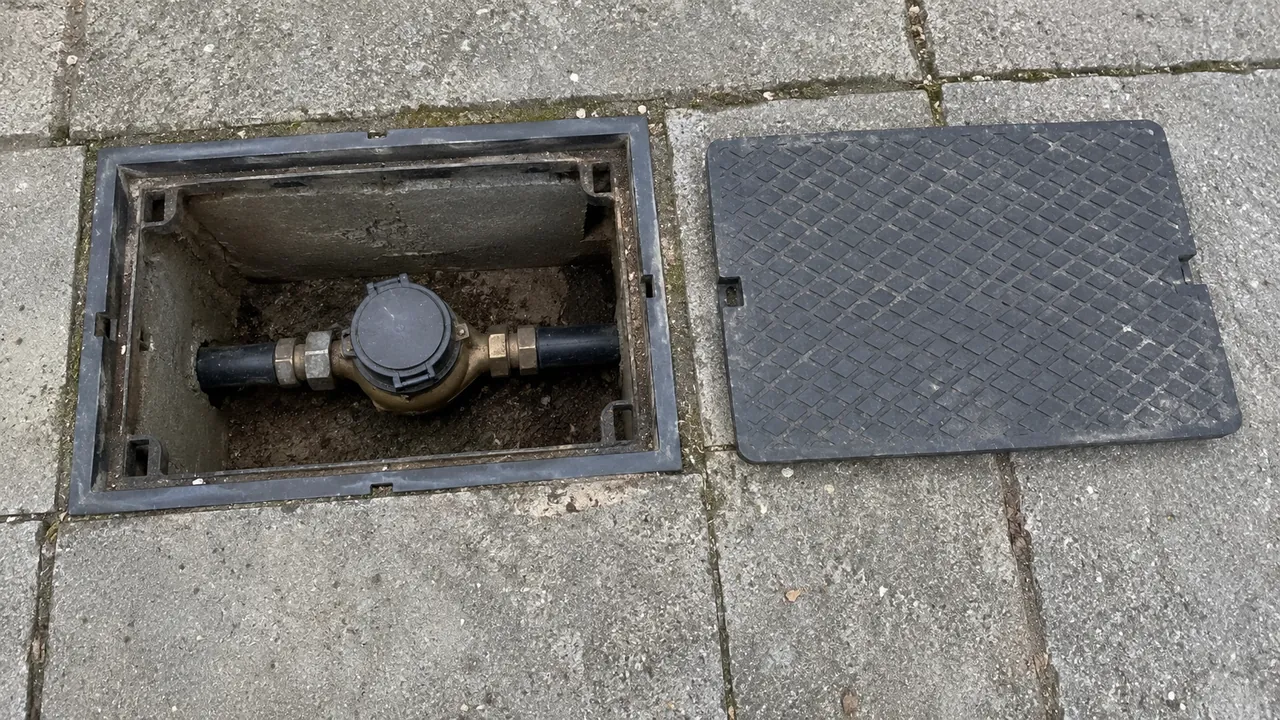
Automated meter reading is an engineered path from the meter interface to your dashboard, built to deliver reads from basements, chambers and risers where manual reads and standard connectivity struggle.
The hard part of AMR is never the dashboard — it is the read. Water and gas meters sit in basements, flooded pits, locked risers, plant rooms, metal kiosks and underground chambers where RF is attenuated by tens of decibels. A module that performs on a bench is worthless if it cannot push a packet out of a concrete vault several times a day, for years, on one battery.
Our own tags transmit at 433 MHz, the band that reaches meters below ground and behind concrete. Where a customer already runs a metering network, we integrate with it rather than replace it: Wireless M-Bus (EN 13757-4), the European metering norm, at 868 MHz in T or C mode for accessible meters and 169 MHz N-mode, ultra-narrowband and high-power, where deep basements and buried chambers demand penetration over throughput; LoRaWAN on EU868 with adaptive data rate and auto-rejoin; or NB-IoT where cellular suits the estate.
On the meter side we work with pulse, encoder and register interfaces confirmed at survey, so existing mechanical water and gas meters are instrumented in place rather than ripped out. Alongside each read the module raises the events that matter — leak, backflow, reverse-flow and tamper — and the network runs as a star to a collector, with repeaters added where a single hop will not clear the building.
Reads land at a gateway running our own containerised stack, where they are buffered, normalised and handed to your platform or ours across a defined API. Cadence is a design decision, not a default: hourly capture aligned to the clock, or tighter, balanced against battery budget, with runtime modelled from real measured performance against duty cycle, payload, signal margin and temperature. Devices are British-made to order, with a supply chain aligned to UK security considerations.
Our specialism is making the read arrive from positions that punish radio. Retry and resend logic, repeated uplinks across spreading factors and redundant payloads are engineered to hold a high data-success rate, and every reading is written to on-device storage — months of hourly history buffered locally and retrievable on demand — so a momentary radio outage is recovered, not lost. External-antenna options and IP68 sealing keep that delivery rate intact in flooded chambers and shielded pits.
AMR here is a data-delivery and visibility layer. It supports consumption analysis, leak and continuous-flow indicators and tamper assurance; it does not replace billing-grade metrological certification or statutory metering duties, which remain with the meter and the responsible party.