01
Rate of rise
Spot the climb, not just the limit.
High limits catch a hot room; a rate-of-rise rule catches one heading there, so the alert arrives while there is still time to act.

Thermal detection puts wireless temperature tags wherever heat builds up, from electrical panels to plant and server rooms, and the dashboard warns named people when temperature starts climbing, before it becomes a trip or failure.
Temperature tags fit to switchrooms, cupboards and panels without wiring and report through a gateway to the dashboard. A blocked vent, a failed air conditioning unit or an overloaded circuit shows as a rising temperature long before anything trips, and the dashboard alerts by SMS or email between thermographic surveys.
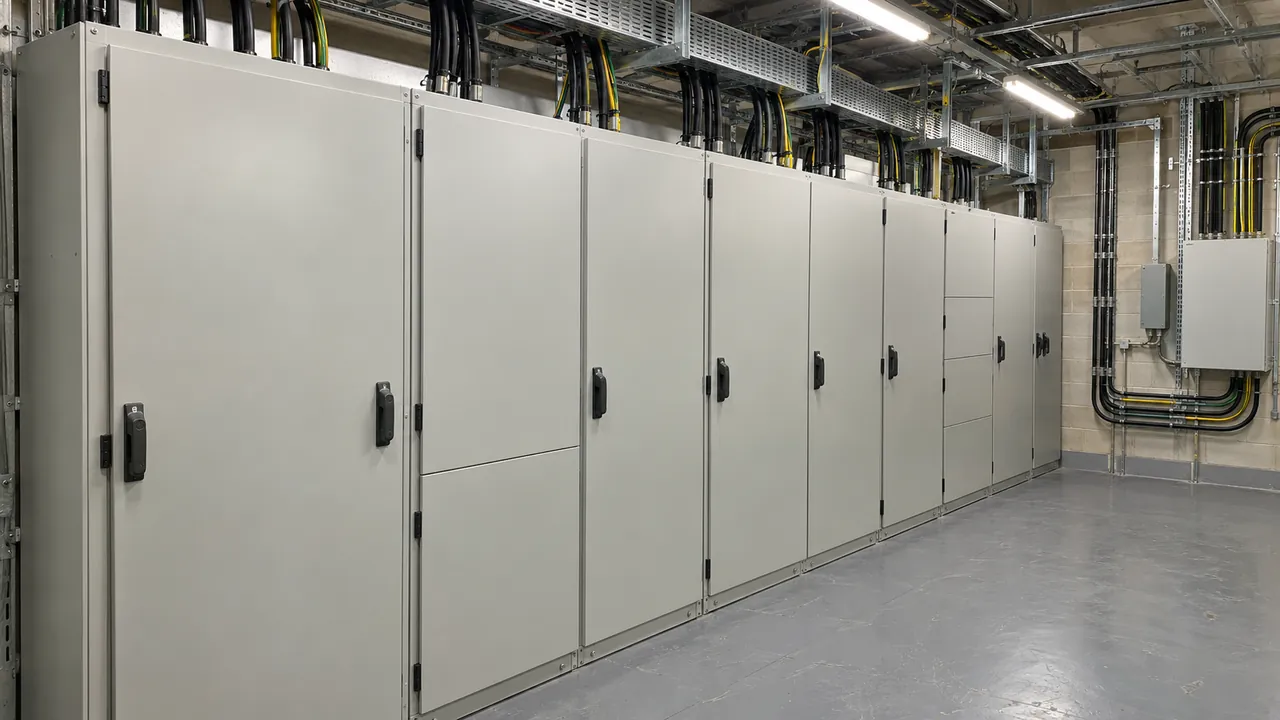
Electrical spaces and server rooms
Room and enclosure temperatures against high limits and rate of rise.
Small shared spaces where a blocked vent raises the heat slowly.
Temperature with the cooling fault and supply state that explain it.
Circuit current alongside temperature, so the alert says what changed.
Switchrooms, riser cupboards and comms rooms are locked and visited rarely, so continuous temperature readings are the only regular view of how they are running.
Switchrooms and LV panel rooms carry heat by design. What matters is the change: a room that runs ten degrees warmer than last month, or an enclosure that climbs through the afternoon as the load rises. A temperature tag with air and surface probes reports that change continuously against high limits and a rate-of-rise you set.
Electrical cupboards and risers are worse, because they are small, shared and often used as storage. A blocked vent or a box of paper against a distribution board raises the temperature slowly. A tag in the cupboard reports it before the board trips or worse.
Server rooms and comms cupboards depend on cooling that fails quietly. A contact tag on the air conditioning fault output, and a power failure tag on its supply, say why the temperature is rising, not just that it is. Server room and data centre monitoring covers the rest of those rooms.
Load explains a lot of heat. An AC current tag on a circuit reports the current it carries, so a temperature rise that follows the load is told apart from one that follows a failed fan.
None of this replaces a thermographic survey, which finds the hot joint on the day. Continuous monitoring covers the other 364 days, so a rise that starts between surveys is seen when it starts.
The tags are battery-powered and transmit over 433 MHz, which carries well through plant rooms and building fabric, to a ZARC Gateway with its own 4G link and internal battery backup. Nothing joins the building or IT network, and every tag checks in on a schedule, so one that goes quiet raises its own alert.
Rate of rise
High limits catch a hot room; a rate-of-rise rule catches one heading there, so the alert arrives while there is still time to act.
Switchrooms and LV panels
Air and surface probes report room and enclosure temperatures continuously, with a history to compare against the last thermographic survey.
Cooling
The fault and run outputs of air conditioning and extract fans are read by a tag and sent as alerts, alongside the temperature they are meant to control.
Load and supply
Circuit current and mains supply to the room are reported with the temperature, so the engineer knows what changed before leaving the office.
Records
Every reading, alert and acknowledgement is kept with its time, for maintenance planning, insurer conversations and post-incident review.
Deployment approach
Most sites begin with the switchroom or server room that has a history, then add cupboards and risers.
We list the electrical spaces and rooms that matter, survey 433 MHz coverage, place air and surface probes where heat starts, set limits and rate-of-rise rules with alert routes, and test every alert before handover.
List the switchrooms, cupboards, panels and server rooms, and who is responsible for each.
Room by room
Confirm probe positions, gateway placement and 433 MHz coverage through the building.
Coverage
Set high limits, rate-of-rise rules and alert routes in and out of hours.
Limits and routes
Test every probe and input and confirm each alert reaches every recipient.
Tested end to end
Add rooms and sites to the same dashboard as confidence grows.
Room to estate
Tell us about the rooms, how they are cooled and who needs the alerts.
Talk to an engineerApplications
Room and enclosure temperatures between thermographic surveys.
Small shared spaces where vents get blocked and heat builds slowly.
Temperature with the cooling and supply states behind it.
Room temperature around the battery estate, where heat shortens battery life.
Unmanned enclosures with nobody nearby to notice.
Heat from motors, drives and boilers in rooms visited weekly at best.
Broader site-condition monitoring for temperature, humidity, air quality, pressure and environmental assurance.
Pressure, temperature, current and run state on remote and unattended equipment.
Discharge events, live cylinder pressure and fault states from suppression systems, reported in real time.
Sensor, firmware, connectivity and reporting design for difficult site conditions and specialist monitoring requirements.
Real-time alerts, escalation and event records, held in the cloud or on your own servers.
Data Centres and Critical Infrastructure
Server rooms and comms rooms: temperature, power, leaks and protective plant alarms.
Heat-risk and environmental monitoring across distributed infrastructure and operational sites.
Practical monitoring workflows for building teams responsible for risk, uptime and estate evidence.
Heat: The Silent Killer of Unmanned Infrastructure Sites
Why heat degrades unmanned sites long before anything fails outright, with the failure patterns and thresholds that matter.
FAQ
Continuous temperature monitoring in switchrooms, electrical cupboards, panel enclosures and server rooms, with alerts when a space rises above its normal level or climbs faster than it should, so the cause is found before a fault.
No. It is an early-warning monitoring layer on a best-endeavours basis. It does not replace certified fire detection, fire alarm signalling or any life-safety system.
No. A thermographic survey finds hot joints and components on the day it is done. Continuous monitoring watches the room and enclosure between surveys, so a rise that starts the week after is not left until next year.
Air probes in the room or cupboard, and probes on a cable to reach into an enclosure or onto a surface. Anything inside a panel is fitted by a competent electrician to the panel owner's rules.
Often, yes. Alongside temperature, tags can read the fault output of the air conditioning, the load on a circuit and the mains supply to the room, so the alert says what changed as well as how hot it is.
Yes. The tags are battery-powered and transmit over 433 MHz to a ZARC Gateway with its own 4G link, so cupboards, substations and remote rooms are covered without mains, cabling or Wi-Fi.
Tell us about the switchrooms, cupboards and server rooms that worry you, and who needs to hear when they get hot. We will say what to fit and where.
Direct contact
Location
Venator House, Unit 9, 15-17 St Stephen's Road, Bournemouth
Dorset, BH2 6LA · VAT GB 409644484
Tell us about the electrical spaces, panels and rooms that matter, and how alerts should be routed.