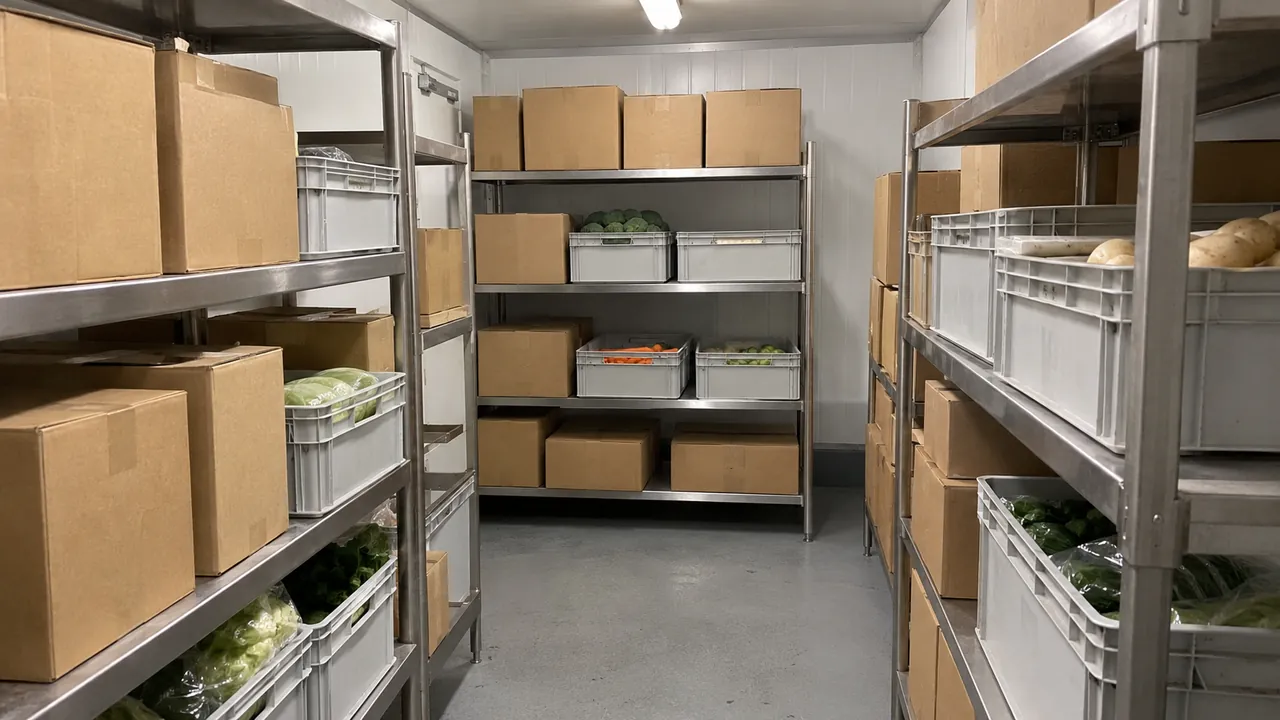
Tags sit inside the cold space, report temperature continuously to the dashboard and raise an alarm the moment a reading moves out of band, with door-contact tags catching the commonest cause first.
A manual temperature log records what the temperature was at check time. A cold space that reports its own state in real time is a different proposition: the drift itself raises the alarm — overnight, at weekends, and on every day nobody happens to look — while there is still time to move stock, close the door or call the engineer.
Most temperature excursions start with a door. A door-contact tag reports the moment a cold room door opens, and an open-too-long rule catches the door that never closed, before the temperature has drifted far enough to threaten the stock. Alerts route to the responsible people by dashboard, email or SMS, with escalation if an alarm goes unacknowledged, so a 2 a.m. excursion gets a 2 a.m. response.
The tags are built for the environment: military-grade battery chemistry rated to −55°C, and sub-GHz radio that penetrates insulated panel, metal cladding and racking where Wi-Fi and Bluetooth fail. Every reading, excursion and door event is recorded as it happens, so the continuous timestamped record that HACCP-style due-diligence regimes ask for builds itself.