Leak detection systems for buildings, estates and critical spaces

Specialist RF water-leak and abnormal-flow detection for buildings and estates — early warning on leaks, bursts, backflow and out-of-hours flow, with alerts engineered to reach the right person and hold up as evidence afterwards.

We design retrofit leak detection for buildings where wiring a BMS into every wet area is expensive, incomplete or simply not going to happen — low-power RF sensing shaped around the site, the risk areas and the way the team actually responds.

Illustrative IoT leak detection systems dashboard showing burst pipe alert, flow rate, water usage, pressure and shutoff recommendation on a leaking pipe

What we deploy

Real-time leak detection, configured around the client.

Retrofit low-power RF

Battery sub-GHz sensors deploy into plant rooms, risers, voids and below-ground positions without opening walls or extending a BMS — coverage on the high-risk areas quickly and at low installed cost.

Built for where water hides

Sub-GHz penetration and IP-sealed sensors keep detection working in wet, concrete and chamber positions that defeat Wi-Fi and 2.4 GHz, with frequency and cadence matched to the site rather than assumed.

Detects the full water story

Leaks, bursts, backflow, reverse flow, continuous draw and out-of-hours night-flow — point confirmation, flow baselining and pressure-transient analysis correlated into a clear account of what changed and when.

Alerts that arrive and stick

Event-, zone- and time-aware routing to dashboard, SMS, email or nominated teams with escalation on non-acknowledgement, backed by retry and redundancy so the warning reaches a person — plus timestamped, evidence-grade logs for audit, claims and post-incident review.

Specialist RF water-leak detection that runs from a single high-risk plant room to a national portfolio on the same architecture.

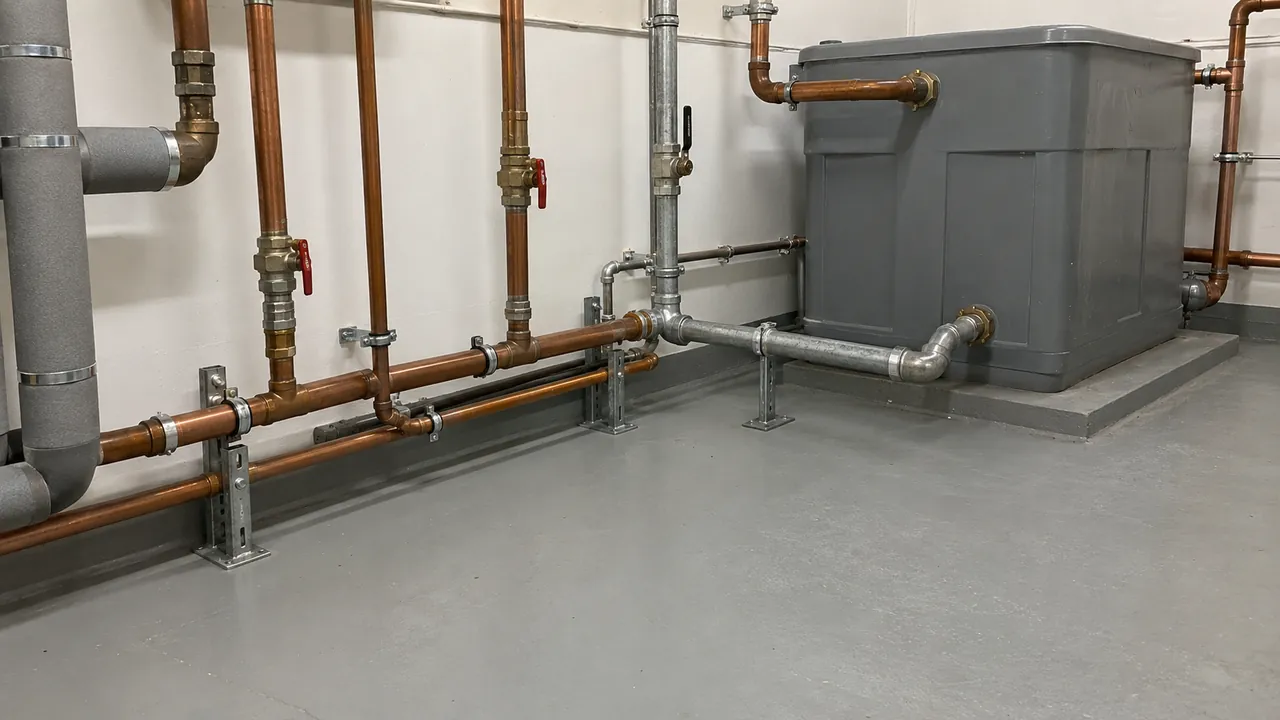
The system is built for retrofit. Battery-powered sensors go into the places water actually fails — plant rooms, risers, tank rooms, voids, under-sink runs, pump rooms and basements — without opening walls, pulling in cable or bending a building to fit a generic template. That suits facilities teams, hotels, student accommodation, commercial blocks, healthcare estates and public-sector buildings.

Detection is carried over low-power sub-GHz radio rather than wired loops or Wi-Fi. Sub-GHz penetrates the concrete, plant and below-ground positions where leaks hide and where 2.4 GHz and Wi-Fi do not reach, and the frequency and reporting profile are matched to each site rather than assumed. Sensors in wet and chamber locations are sealed to the appropriate IP rating, because a leak sensor that fails when it gets wet is worse than none.

We detect more than a puddle on a floor. Point sensors confirm water where it should never be; flow baselining catches slow losses and continuous draw; pressure-transient analysis flags burst-like signatures; and night-flow analysis surfaces water moving when the building should be still. Backflow, reverse flow and abnormal-usage conditions are treated as first-class events, not footnotes.

Catching the event is only half the job; the alert has to arrive. Routing is shaped around the operating model — event type, zone, time of day, occupancy and out-of-hours cover — and pushed to dashboard, SMS, email or nominated teams, with escalation if it is not acknowledged. Retry and redundancy in the radio layer keep that path intact from the awkward positions sensors actually sit in.

Battery life is engineered against sensor type, reporting cadence and site conditions, with selected devices designed for multi-year service so maintenance overhead does not kill a project before it scales. The same system runs a single pilot or an estate-wide rollout without losing the audit trail.

Analysis can be AI-assisted, running on local edge hardware or in the cloud to suit latency, data-residency and governance, and tuned to the RF profile a site uses — abnormal flow, burst signatures and night-flow patterns assessed automatically and raised as events rather than left in raw telemetry. Data can sit in a private PostgreSQL deployment or in AWS. This is a detection, alerting and evidence layer that strengthens a building's water-safety response; it does not replace plumbing design, statutory water-safety duties or a physical shut-off regime.

01

Early warning

Water leaks that need to be detected before damage spreads.

Slow losses, hidden pipework failures and local water events can create major damage before they are visible. A real-time leak detection layer gives teams earlier warning across high-risk rooms, risers, plant areas and vulnerable spaces.

02

Operational routing

Alerts that need to reach the right people at the right time.

Every estate has different cover patterns. Alerts can be routed by event type, timing schedule, site, zone or escalation path so maintenance teams receive actionable notifications rather than generic alarm noise.

03

Analytics visibility

Water usage that needs to be understood in real time.

Night-flow and out-of-hours analytics can help identify abnormal usage patterns where water should not normally be moving. This supports earlier isolation, investigation and targeted action.

Deployment route

Discuss your water leak detection system, then deploy it properly

A practical route from water-risk brief to live leak detection, covering sensors, RF coverage, alert schedules, dashboard configuration and estate rollout.

The process is specific to leak detection systems: understand the building, place the right devices, configure the alert paths, prove the behaviour in the field and then scale with evidence.

Discuss

Discuss your water leak detection system requirements: estate type, known leak risks, BMS limitations, alert routes and response cover.

Water risk brief

Survey

Map plant rooms, risers, communal areas, accommodation blocks, RF conditions, gateway locations and high-risk water routes.

Site profile

Configure

Configure leak sensors, dashboard views, SMS and email notifications, timing schedules, data storage and escalation rules.

System configured

Prove

Run a controlled pilot to test signal quality, night-flow analytics, thresholds, false-alarm behaviour and response workflows.

Pilot proven

Scale

Roll out the water leak detection system across the estate, with monitoring, analytics, support and reporting built in.

Estate rollout

Have a facilities estate, student accommodation block, hotel or critical building that needs water leak detection?

Discuss a leak detection system

Where it applies

Designed for places where water damage becomes expensive quickly

Facilities management

Portfolio leak detection for facilities teams managing multiple sites, contractors and escalation paths.

Student accommodation

Early warning for high-occupancy buildings where leaks can spread quickly and access patterns vary.

Hotels and blocks

Retrofit protection for rooms, risers, plant spaces and communal areas without major building works.

Healthcare and public sector

Evidence-led estate monitoring where disruption, governance and response accountability matter.

FAQ

Frequently asked questions

What is a water leak detection system?

It is retrofit RF sensing across wet areas, plant rooms, risers and voids that detects leaks, bursts, backflow and abnormal flow early, then routes the alert to the person who can actually stop the water.

What water events can be detected?

Leaks, bursts, backflow and reverse flow, continuous draw and out-of-hours night flow — the event patterns that distinguish a developing incident from normal building usage.

How is this different from wiring leak alarms into a BMS?

Wiring every wet area into a BMS is expensive and usually incomplete. Low-power RF sensors retrofit into the spaces the BMS never reached, shaped around the site's actual risk areas and response workflow.

Can it cover hard positions like basements and risers?

Yes. Sub-GHz radio penetrates basements, risers and plant rooms, and delivery assurance — retries and redundant uplinks — is engineered so events arrive from the hardest positions.

How do alerts reach the right person?

Alerts are routed by area, team and time of day with escalation if unacknowledged, and every event is timestamped so the response can be reviewed and evidenced afterwards.

Does it shut the water off automatically?

No — this is the detection and alerting layer. Automatic shut-off valves are a separate control, and we monitor those too, so a valve trip and the event behind it appear on the same dashboard.

Ready to discuss
your IoT leak detection

system?

Share the building type, estate size and known risk areas. We will help shape a practical pilot route for a leak detection system that can scale.

Location

Aylsham Business Park, Norwich

Norfolk NR11 6FD · VAT GB 409644484

Contact an IoT leak detection expert

Tell us about the building, estate size, risk areas and alert requirements. An engineer will review it.

No mailing lists. No spam. We reply directly to your enquiry.