01
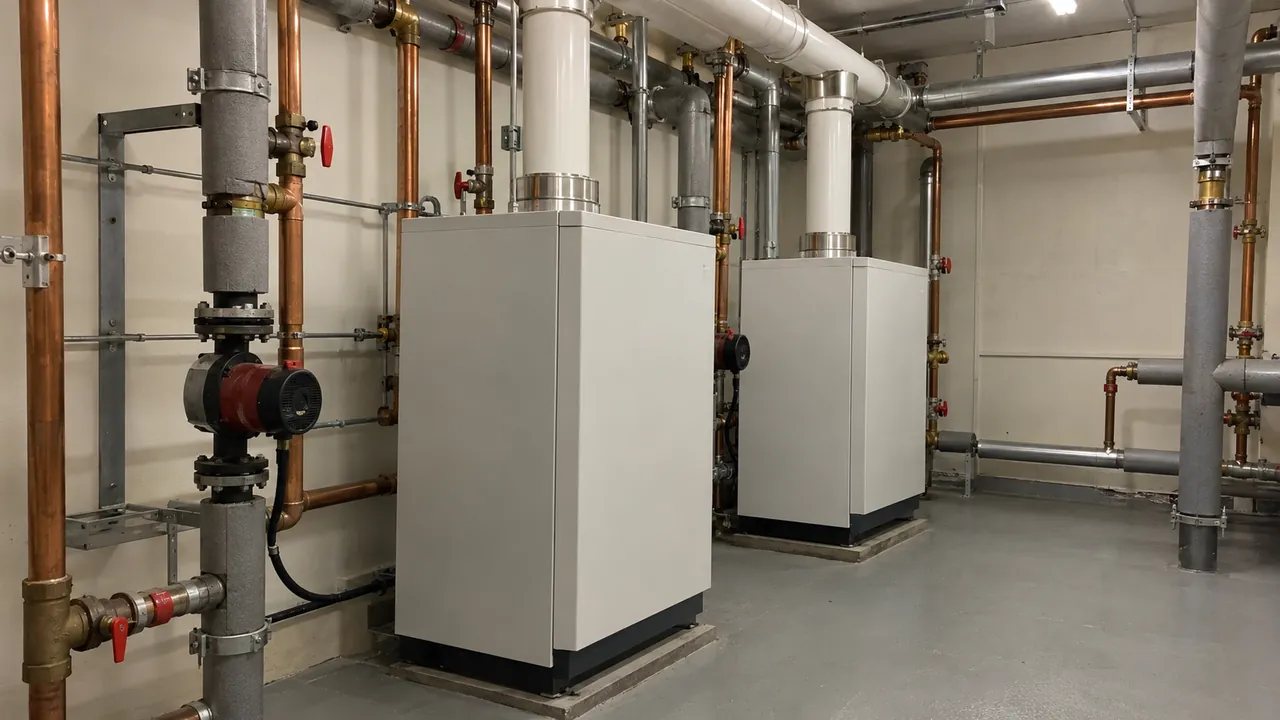
Heating plant
Heating back on before the building opens.
Boiler lockout and fault outputs, and flow and return temperatures, reported the moment they change to the estates team or the heating contractor.

Remote building monitoring for a whole estate from one dashboard: plant rooms, boilers, water, mains supplies and fire alarm outputs, with SMS or email alerts to the estates team.
Nothing in the building is rewired or replaced: the sensors read the outputs your boilers, pumps and panels already have. One ZARC Gateway per building connects over 4G or Wi-Fi, and once it is in, sensors for any new requirement can be added without another installation project. Every alert and acknowledgement is logged as a dated record for insurers and compliance reviews.
Real-time building monitoring
Boiler lockouts and flow and return temperatures, reported as they change.
Water on the floor, supply pressure and overnight flow on the meter.
Supply loss to plant rooms, and fire and smoke alarm outputs sent off site.
Empty units watched for water, entry and frost; CO2 and humidity in occupied rooms.
Boiler lockouts, leaks into risers, supply failures and falling temperatures in void units are reported as they happen, building by building, on the dashboard the whole portfolio uses.
Heating and hot water are the most common complaint. A contact tag on the boiler's lockout or fault output, and temperature tags on flow and return pipework, report a failure as it happens, so heating is back before the building opens rather than after the first phone call.
Water is the most expensive. Leak tags in plant rooms, risers, under tanks and below kitchens report water on the floor and again when it clears, and pressure and pulse tags on the incoming supply show a burst or a meter that keeps turning overnight.
Power is the quietest. A power failure tag on a plant room or distribution board reports the loss and the restoration, so a tripped supply to pumps, lifts or a server cupboard is known straight away.
Fire and smoke alarm outputs can be sent off site as a supplementary alert, so a panel in an unoccupied building reaches a named person. The certified system and its signalling stay as they are.
Some of an estate stands empty between lets, and void property monitoring watches those units for escape of water, entry and frost until they are occupied again. Occupied spaces can report CO2, temperature and humidity where ventilation and comfort are the complaint.
Every building reports to one dashboard, grouped the way the estate is run, with a record of every reading, alert and clear. The same tags and gateway cover a single office or a mixed portfolio.
Heating plant
Boiler lockout and fault outputs, and flow and return temperatures, reported the moment they change to the estates team or the heating contractor.
Water
Leak tags in plant rooms, risers and under tanks, and supply pressure and overnight flow from the meter you already have.
Water safety
Temperatures at calorifiers and sentinel outlets reported continuously, supporting the records the water safety plan already requires.
Power and supplies
Mains loss and restoration on plant rooms and boards, and water and gas supply loss across the estate.
Alarms off site
Fire panel, smoke detector and plant alarm outputs sent to named people as a supplementary alert, without touching the certified system.
One dashboard
Buildings, rooms and tags grouped by region, client or building type, with a record of every reading, alert and clear that exports for reviews and insurers.
Deployment approach
Most estates begin with a handful of buildings and extend once the alerts have proved themselves.
We list the buildings and the plant, water and power points that matter, survey coverage in basements and risers, fit tags without wiring, set limits and alert routes, and test every alert before handover.
List the buildings, plant, water systems and alarms that matter, and who is responsible for each.
Building by building
Confirm gateway placement and 433 MHz coverage through basements, risers and plant rooms.
Coverage
Set temperature, pressure and level limits and alert routes in and out of hours.
Limits and routes
Test every tag and input and confirm each alert reaches every recipient.
Tested end to end
Add buildings to the same dashboard, grouped the way the estate is run.
Building to portfolio
Tell us about the estate, the buildings that cause call-outs and who needs the alerts.
Talk to an engineerApplications
Heating, water, power and plant alarms across occupied buildings.
Plant rooms, risers, communal heating and leaks below flats.
Boiler houses, kitchens and plant spread across many buildings.
Water, entry and frost in units between lets.
The rooms nobody visits until something goes wrong.
Buildings of every age and type on one dashboard.
Remote asset monitoring systems
One system for every asset across every site: sensors, a gateway per site and one dashboard.
Counts pulses from a meter you already have, with leak and no-flow alerts.
Reads a smoke detector's alarm and passes it to the dashboard, which alerts people off site.
Reports CO2 in ppm, the plain measure of whether a room is ventilated.
Carbon monoxide monitoring tag
Reports CO in ppm to the dashboard, alongside the certified alarms already fitted.
Battery fence-line, gate and PIR alerting for estate boundaries with no mains power or cabling.
Wireless sound-level monitoring with instant threshold alerts — levels, not audio.
Estate-wide visibility, contractor handover, dashboards and exception alerts across distributed sites.
Temperature, humidity, air-quality, pressure and site-condition monitoring for distributed estates.
Custom device, gateway and reporting design shaped around unusual building and estate conditions.
Sensor, firmware, radio, antenna and gateway engineering for low-power telemetry in difficult buildings.
Real-time alerts, escalation and event records, held in the cloud or on your own servers.
Facilities Management and Property Operators
Facilities monitoring for plant rooms, utilities, security systems, contractor workflows and evidence-ready reporting.
Medicine fridges, plant rooms, water temperatures and room pressure across healthcare estates.
Local Government and Public Sector Estates
Multi-site visibility, governance reporting and contractor workflow support for public-sector estates.
Smart buildings and estates case study
A field deployment across occupied buildings: what was monitored and what the estate team saw.
FAQ
Wireless tags in plant rooms, risers, basements and empty units report temperature, water, power, pressure and the alarm outputs of building plant, and alert the people responsible in real time. One dashboard covers every building on the estate.
No. It covers the buildings, rooms and points a BMS does not reach or that would be too costly to add to one, such as small sites, risers, voids and plant without a controls connection. Where a BMS exists, it sits alongside it.
No. The tags are battery-powered and transmit over 433 MHz to a ZARC Gateway with its own 4G link and internal battery backup, so nothing joins the building or tenant network.
Yes, as a supplementary alert. A tag reads the panel or detector output and tells named people off site. The certified fire alarm system and any monitoring contract stay exactly as they are.
Tags fit to pipework, tanks, boards and alarm outputs without new wiring, and one gateway covers a building. A site survey confirms coverage in basements and risers before anything is fitted.
There are no per-alert, per-user or licence charges. The system is charged monthly per tag and per gateway, so a new building is its gateway and tags on the same dashboard.
Tell us about the estate, the buildings and plant that cause call-outs, and who needs to hear about them. We will say what to fit and where.
Direct contact
Location
Venator House, Unit 9, 15-17 St Stephen's Road, Bournemouth
Dorset, BH2 6LA · VAT GB 409644484
Tell us about the buildings, the plant, water and power that matter, and who needs the alerts.