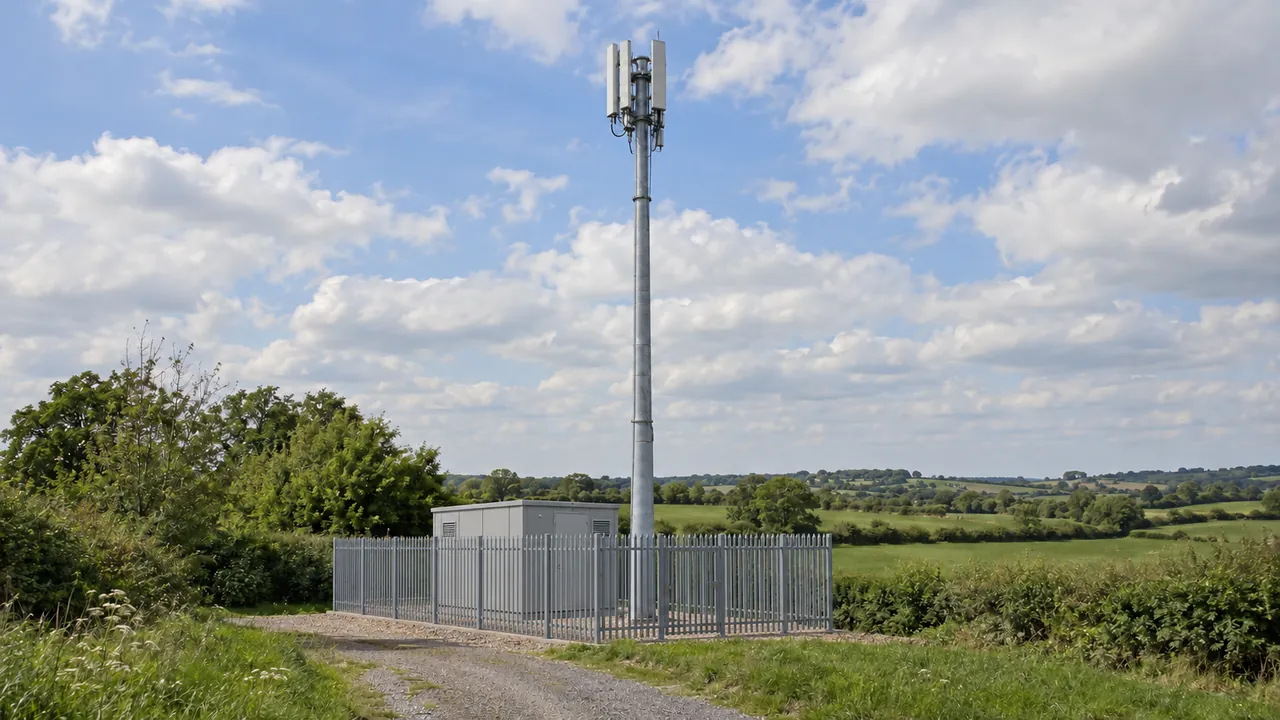
A wireless station on each mast reads the conditions around it continuously and puts every structure on one live view, with an instant alert the moment sway, wind or a shock crosses its threshold, alongside your structural inspections.
A mast or tower is one of the most expensive things on a site and one of the hardest to keep eyes on. Between scheduled inspections, owners have little idea how the structure is actually behaving — how much it sways in high wind, whether vibration is creeping up, or whether it took a lightning strike or a knock overnight. The conditions that wear a structure out happen continuously; the visibility does not.
We close that gap with a wireless station retrofitted to the structure. It reads the movement of the mast itself — sway, tilt and vibration — alongside the weather driving it: wind speed and direction, temperature, humidity and barometric pressure. It also flags discrete events such as lightning strikes and lateral shocks. Because it is battery-powered and clamps on without wiring, it goes up in a single visit, and because it is movable it follows the structures that matter.
The instant a reading crosses its threshold — sway beyond its normal envelope, wind above a set limit, a strike or a sharp movement — that event is pushed as a real-time alert and the structure's status updates on the dashboard. Routing is shaped around how the estate is run, by site, region and team, so an abnormal mast reaches the person who can act rather than waiting for the next climb.
Every reading and event is timestamped and retained, building a condition profile for each structure over time. That record is what turns a mast from a black box into something with a history — supporting maintenance planning, root-cause review after a storm, and the warranty and insurance conversations around assets that often carry surprisingly short guarantees.
It is the live condition layer around your structures, running on retrofit, low-cost hardware across a single mast or a national estate on one consistent feed. It complements your structural inspection and engineering regime; it does not replace them, and it is a monitoring and evidence system rather than a structural-safety guarantee.