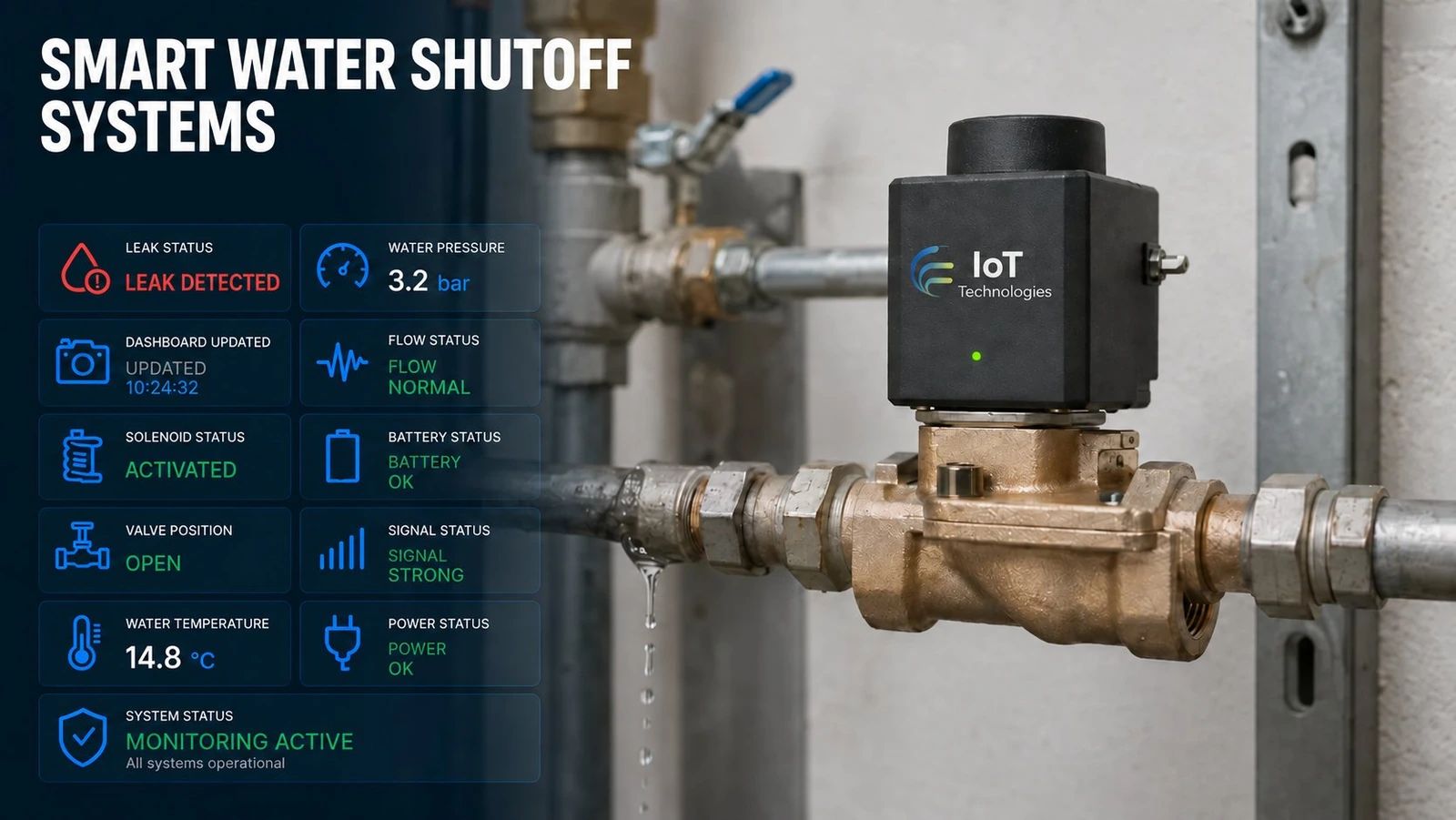
We do not replace your valves or your plumbing. We retrofit a low-power sensor to each one, read the moment it changes state, and put every valve across the estate on a single live view.
Automatic and smart water shut-off valves do one job well: when a leak or abnormal flow is found, they close the supply and stop the water. The gap is not the valve — it is knowing, across a whole portfolio, which valves have closed, where and when. On an estate of hundreds of units that signal usually never leaves the building.
We close that gap with a retrofit sensor fitted to the valve you already have. The valve closing is a clear change of state, and the sensor reads that state directly. Because it reads the physical state rather than the valve's own network, it works the same whether a unit talks ZigBee, LoRaWAN or nothing at all — so a mixed estate of different makes lands on one consistent feed.
The instant a valve trips, that event is pushed as a real-time alert and the valve's status updates on a live dashboard. Routing is shaped around how the estate is run — by site, region, team, time of day and out-of-hours cover — and escalated if it is not acknowledged, so a closed valve reaches a person rather than sitting unseen until a tenant calls.
It is built for retrofit and for scale. Sensors are CE-certified, low-cost to install with no rewiring, and designed for multi-year battery life, so maintenance overhead does not kill a rollout before it reaches the whole estate. The same architecture runs a single building pilot or thousands of valves across a national portfolio, with the audit trail intact throughout.
This is a visibility and alerting layer that strengthens the shut-off regime you already have. It complements your valves, plumbing design and insurance obligations on a best-endeavours basis; it does not replace them, and it does not control the valve.